Zelda Ocarina of Time Remake: Release Date & Gamescom News
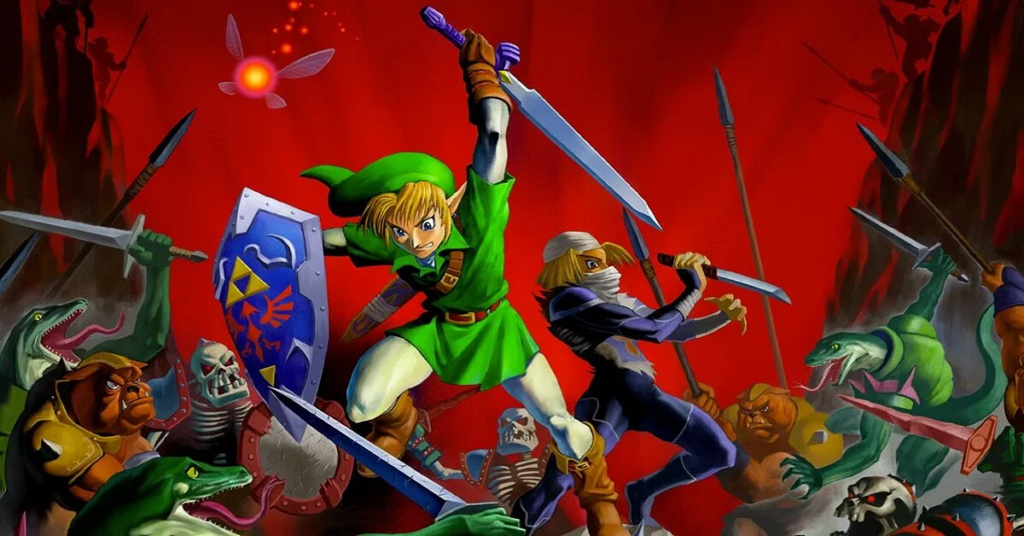
The Zelda Ocarina of Time remake has become one of the biggest announcements for Nintendo fans in 2026. For years, players have wondered whether Nintendo would revisit one of the most influential games in video game history and rebuild it for modern hardware. That speculation finally became reality when Nintendo announced a new version of The Legend of Zelda: Ocarina of Time for Nintendo Switch 2.
The original Ocarina of Time was released for the Nintendo 64 in 1998 and quickly became a landmark title for 3D adventure games. Its world design, combat system, puzzles, music, characters, and time-travel mechanic influenced countless games that followed. Now, more than two decades later, Nintendo is bringing that classic experience to a new generation.
Nintendo officially revealed the game during its June 2026 Nintendo Direct, describing it as the Nintendo 64 classic “reborn” for Nintendo Switch 2. The company confirmed a 2026 release window, although a specific launch date and many gameplay details have not yet been announced.
This makes the Zelda Ocarina of Time remake especially interesting because it is not simply another release of the original game. Nintendo is presenting it as a remake designed for modern hardware, which naturally raises questions about graphics, gameplay, exploration, dungeons, controls, story changes, and possible new content.
What Is the Zelda Ocarina of Time Remake?
The Zelda Ocarina of Time remake is a modern version of Nintendo’s classic 1998 adventure game. Instead of simply improving the resolution or placing the original game on a newer console, Nintendo is rebuilding Ocarina of Time for Nintendo Switch 2.
The announcement trailer was relatively brief, so Nintendo has not yet explained every feature of the project. However, the official reveal confirms that Ocarina of Time is returning in 2026 specifically for Nintendo Switch 2.
That distinction matters. A remaster usually keeps the original game’s assets and mechanics while improving areas such as resolution, frame rate, lighting, textures, or sound. A remake can go much further by rebuilding environments, characters, animations, controls, and systems.
Fans are therefore expecting the Zelda Ocarina of Time remake to take advantage of the considerably more powerful hardware available today.
Why Ocarina of Time Is So Important
To understand why this remake has generated so much excitement, it helps to understand the importance of the original.
Ocarina of Time was the first mainline Zelda adventure to move the series into a fully 3D environment. Nintendo had already established the basic Zelda formula with earlier 2D games, but the move into 3D created an entirely new way to explore Hyrule.
Players controlled Link as he traveled through forests, villages, fields, temples, caves, and mysterious locations. The game combined exploration with sword combat, puzzle solving, item collection, dungeon progression, and story development.
One of its most important innovations was the lock-on combat system. The Z-targeting mechanic helped make 3D combat more manageable by allowing players to focus on individual enemies while controlling Link’s movement.
The game also introduced a memorable time-travel system. Link begins his journey as a child and later becomes an adult, with changes occurring throughout Hyrule depending on the period being explored.
These ideas helped establish conventions that are still recognizable in modern action-adventure games.
What Could Change in the Remake?
Nintendo has not revealed the complete feature list for the Zelda Ocarina of Time remake, so some elements remain unknown. However, there are several areas where a modern remake could make a significant difference.
Modern Graphics
The most obvious upgrade will likely involve visual presentation.
The original Ocarina of Time was technically impressive for its era, but its polygonal characters, textures, environments, and limited lighting obviously look dated compared with modern games.
A modern remake could recreate Hyrule with detailed environments, improved character models, realistic lighting, richer vegetation, better water effects, and more expressive animations.
The debut footage has been described as leaning toward a higher-fidelity visual style, although Nintendo has not yet provided enough footage to determine exactly how the final game will look.
For longtime fans, seeing locations such as Kokiri Forest, Hyrule Field, Kakariko Village, Death Mountain, Lake Hylia, and the temples rebuilt with modern technology could be one of the biggest attractions.
Improved Controls
The original controls were designed around the Nintendo 64 controller. While they remain playable today, modern players may expect more flexible controls.
The Zelda Ocarina of Time remake could introduce smoother camera movement, improved aiming, faster item switching, modern button layouts, and more responsive sword combat.
Nintendo could also make movement feel closer to modern Zelda games without completely changing the identity of the original.
This would be particularly useful for players discovering Ocarina of Time for the first time.
Better Camera System
The camera is another area that could benefit from modernization.
The original game helped establish 3D camera conventions, but players occasionally had to manually adjust the camera or work around awkward angles.
A remake could offer a smoother free camera while keeping the original lock-on system. This could make exploration and combat feel much more comfortable without removing the mechanics that made the original special.
Expanded Environments
One of the most interesting possibilities is a larger and more detailed Hyrule.
Nintendo does not need to completely redesign the game’s world, but additional environmental detail could make familiar areas feel much more alive.
Hyrule Field, for example, could contain more wildlife, environmental interactions, hidden areas, and visual storytelling. Towns could have more detailed interiors and additional character animations.
However, the challenge would be maintaining the original game’s pacing. Adding too much content could make the experience feel very different from Ocarina of Time.
Could the Story Be Expanded?
The original story is one of the strongest parts of Ocarina of Time.
Link begins his journey in Kokiri Forest before discovering that his destiny is connected to the larger world of Hyrule. His adventure eventually involves Princess Zelda, Ganondorf, the Triforce, the seven sages, and the mysterious power of time.
A remake could potentially expand certain story moments without changing the main narrative.
More dialogue, additional character interactions, improved cinematics, and expanded scenes could provide greater context for characters who had relatively limited screen time in the original.
Princess Zelda, Sheik, Ganondorf, Rauru, Saria, Darunia, Nabooru, and other characters could benefit from additional development.
At the same time, Nintendo would need to be careful. Ocarina of Time’s story works partly because of its simplicity. Making every scene longer or adding excessive dialogue could weaken the game’s straightforward adventure structure.
The Dungeons Could Be Very Different
The dungeons are another major part of the Ocarina of Time experience.
The original game features memorable locations such as the Forest Temple, Fire Temple, Water Temple, Shadow Temple, Spirit Temple, and others.
Some of these locations are still praised today, while others are remembered for frustrating mechanics. The Water Temple is perhaps the most famous example.
A remake could preserve the original dungeon layouts while improving navigation and puzzle design. It could also introduce new rooms or alternate solutions.
The biggest question is whether Nintendo will attempt to redesign entire dungeons.
A complete redesign could make the game feel fresh even for longtime fans, but it could also disappoint players who expect the original experience.
The safest approach would probably be to preserve the identity of each dungeon while improving the areas that were less intuitive.
The Ocarina Could Become More Interactive
The ocarina itself is central to the game’s identity.
Link learns songs that allow him to interact with the world, communicate with characters, manipulate time, and access different locations.
In a modern remake, Nintendo could make the musical system more flexible. Instead of selecting songs through a simple button sequence, the game could provide a more modern interface.
However, the classic songs would still need to remain recognizable because they are some of the most memorable pieces of Zelda music.
The Song of Time, Song of Storms, Zelda’s Lullaby, Epona’s Song, Saria’s Song, and the other melodies are closely associated with the game.
What About New Content?
This is one of the biggest questions surrounding the Zelda Ocarina of Time remake.
Nintendo could include optional side quests, new collectibles, additional areas, expanded character stories, or entirely new challenges.
There is precedent for Nintendo revisiting Zelda games and adding improvements. The Nintendo 3DS version of Ocarina of Time included several quality-of-life changes compared with the Nintendo 64 original.
A modern remake could go much further.
Players might discover new secrets throughout Hyrule, additional interactions with NPCs, expanded side quests, or new rewards for completing optional challenges.
However, Nintendo has not confirmed such features yet. Until more official information is released, these possibilities should be treated as speculation rather than confirmed content.
Why Nintendo Switch 2 Makes Sense
The Zelda Ocarina of Time remake is being developed for Nintendo Switch 2, and the timing makes sense.
The Legend of Zelda celebrated its 40th anniversary in 2026, creating a natural opportunity for Nintendo to revisit one of the franchise’s most influential games.
Nintendo has also been using Switch 2 as a platform for technically ambitious projects and upgraded versions of major games.
A remake of Ocarina of Time gives Nintendo an opportunity to introduce one of its most important classics to younger players while giving longtime fans something substantially different from another simple port.
It also allows Nintendo to demonstrate what the new hardware can do with one of its most recognizable franchises.
Will the Remake Be Similar to Breath of the Wild?
Probably not in terms of overall design.
Breath of the Wild and Tears of the Kingdom introduced enormous open worlds and significantly more player freedom. Ocarina of Time was designed around a more structured adventure.
The remake could borrow modern ideas without turning the game into a Breath of the Wild-style experience.
For example, improved climbing, movement, physics, or environmental interaction could be possible, but completely rebuilding Hyrule as an open-world sandbox would fundamentally change the original.
The better approach would be to modernize the presentation and controls while respecting the structure that made Ocarina of Time successful.
Could Major Changes Be Coming?
Some reports and rumors before the official announcement suggested that the project could be more ambitious than a traditional remaster. One May 2026 report discussed claims that the game could be closer to a ground-up reimagining than a straightforward visual remake. Those details were not confirmed by Nintendo at the time.
Now that the game has been officially revealed, fans still need to wait for Nintendo to explain exactly how much has changed.
This is where expectations need to remain realistic.
A remake can preserve the original story while changing almost every technical aspect of the game. Alternatively, it can remain extremely faithful while simply rebuilding the visuals and controls.
Until Nintendo releases more gameplay footage, it is impossible to say which direction the final product will take.
Release Date and Platform
Nintendo has confirmed that the Zelda Ocarina of Time remake is coming in 2026 for Nintendo Switch 2.
The announcement was made during Nintendo’s June 2026 Direct presentation. Nintendo’s official announcement described the game as the Nintendo 64 classic returning for a new generation and being reborn for Nintendo Switch 2.
A specific release day has not been provided in the official announcement.
This means players should be cautious about social media posts claiming an exact date unless Nintendo officially confirms it.
The game is currently positioned as a Switch 2 title, making it another major reason for Zelda fans to consider Nintendo’s newer hardware.
What Fans Want From the Remake
The community has plenty of ideas about what should be included.
Many players want modern graphics without losing the atmosphere of the original. Others want improved dungeons, smoother combat, a better camera, faster menus, expanded side quests, and more detailed environments.
There is also strong interest in preserving the original music and overall tone.
Another popular expectation is that Nintendo will avoid changing the game simply for the sake of adding modern features.
The strongest remake would probably be one that feels familiar within minutes but noticeably better to play.
That balance is difficult to achieve, but it is exactly what makes the project so exciting.
Why New Players Should Care
Someone who has never played Ocarina of Time might wonder why a game from 1998 deserves a major remake.
The answer is simple: many modern adventure games still use ideas that Ocarina of Time helped popularize.
Its approach to 3D navigation, combat, targeting, dungeon design, environmental puzzles, item-based progression, and cinematic storytelling influenced the industry.
Playing the original today can also reveal why certain conventions became so common.
The Zelda Ocarina of Time remake could therefore become the ideal introduction for a new generation.
Instead of asking new players to adapt to nearly three-decade-old controls and visuals, Nintendo can present the same foundational adventure through modern technology.
Is the Zelda Ocarina of Time Remake Worth the Hype?
It certainly has the potential to be one of Nintendo’s biggest releases of 2026.
The original is already regarded as one of the most important games ever made. A modern remake does not need to reinvent every part of it to be successful.
What matters most is execution.
If Nintendo can combine modern visuals, responsive controls, improved camera movement, better dungeon navigation, enhanced sound, and respectful storytelling, the result could appeal to both longtime Zelda fans and newcomers.
The biggest risk is changing too much.
Ocarina of Time has a very specific identity. Its pacing, atmosphere, music, characters, and world progression are part of why it remains memorable.
A remake should improve the experience rather than erase the qualities that made the original special.
Final Thoughts
The Zelda Ocarina of Time remake represents more than another Nintendo remake. It is a chance to revisit one of the defining games of the 3D era and introduce its world to a completely new audience.
Nintendo has officially confirmed the project for Nintendo Switch 2 in 2026, but many important details remain unknown. The company has yet to reveal the complete gameplay systems, final visual style, additional content, exact release date, and many other features.
That uncertainty is part of the excitement.
Ocarina of Time already has a strong foundation. With modern hardware, Nintendo has the opportunity to make Hyrule more detailed, combat more responsive, controls more comfortable, and exploration more immersive without losing the spirit of the original adventure.
If Nintendo finds the right balance between nostalgia and modernization, this remake could become one of the most memorable Zelda releases of the decade.
For fans who have been waiting years to see Link’s classic adventure rebuilt for modern hardware, the wait is finally coming to an end.
FAQs About Zelda Ocarina of Time Remake
Is the Zelda Ocarina of Time remake officially confirmed?
Yes. Nintendo officially announced The Legend of Zelda: Ocarina of Time for Nintendo Switch 2 during its June 2026 Nintendo Direct. The game is scheduled for release in 2026.
When is the Zelda Ocarina of Time remake coming out?
Nintendo has confirmed a 2026 release window but has not announced a specific launch date in its official announcement.
Which console will the remake be available on?
The game has been announced for Nintendo Switch 2. Nintendo has described it as the Nintendo 64 classic being reborn for the new generation.
Is this a remaster or a remake?
Nintendo is presenting the project as a remake rather than simply a basic port or remaster. However, the company has not yet explained the full technical scope of the remake.
Will the story remain the same?
The core story is expected to center on Link’s adventure involving Princess Zelda, Ganondorf, the Triforce, and the fate of Hyrule. Nintendo has not yet revealed whether additional story content will be included.
Will the graphics be completely redesigned?
The available reveal indicates a modern visual presentation, but Nintendo has not published enough gameplay footage to explain the complete graphical upgrade.
Will the original dungeons return?
The official announcement has not provided a detailed dungeon list or explained how individual dungeons have been changed. Fans will need to wait for more gameplay information.
Could the remake include new areas?
It is possible, but Nintendo has not confirmed additional areas or major new locations. Claims about specific new content should be treated as rumors until officially announced.
Will the remake be open world?
There is currently no official indication that the game will become a Breath of the Wild-style open-world adventure. The original game’s structured progression remains an important part of its identity.
Why is the remake so important to Zelda fans?
Ocarina of Time is one of the most influential games in the Zelda series and helped establish many conventions used in 3D action-adventure games. A modern remake gives Nintendo the opportunity to preserve that legacy while making the experience more accessible to today’s players.

I am a professional content writer and SEO specialist with experience in creating well-researched, accurate, and user-focused content. I write about technology, business, finance, automotive, lifestyle, and trending news. My goal is to provide readers with reliable, up-to-date, and easy-to-understand information while following Google’s content quality and editorial best practices.