Musk’s 100,000 Starlink Satellites Could Outrun Undersea Cables
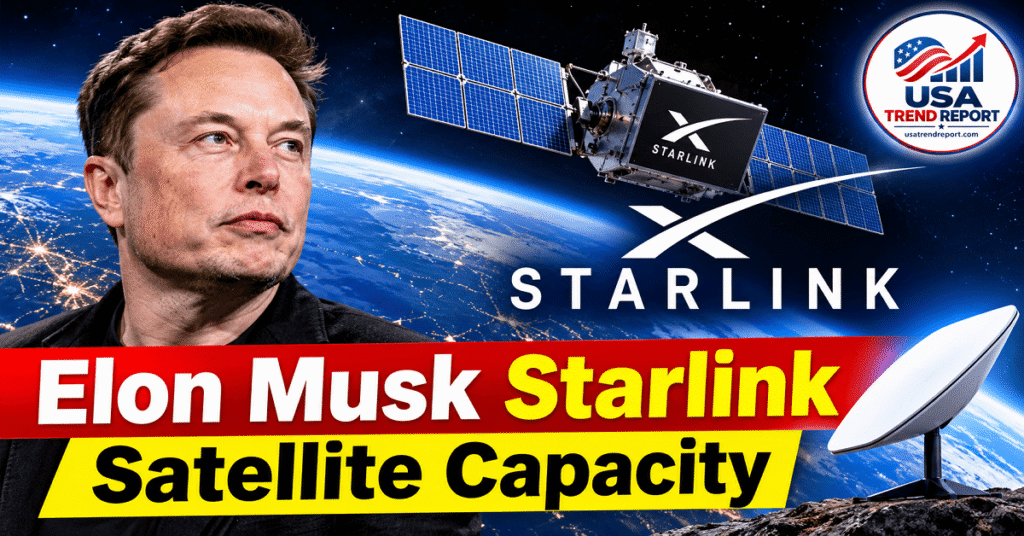
Elon Musk has ambitious plans to transform the global internet industry through SpaceX’s Starlink satellite network. What started as an ambitious project to provide internet access in remote areas has grown into one of the world’s largest satellite internet systems. With thousands of satellites operating in low Earth orbit, Starlink is changing how people access high-speed internet, particularly in locations where traditional broadband infrastructure is difficult to establish.
One of the most interesting developments is the increasing Elon Musk Starlink satellite capacity. SpaceX is continuously developing advanced satellites designed to deliver more data, support additional users, and improve internet performance. The company is also introducing new satellite generations that could significantly increase the overall capacity of its network.
Recent developments involving Starlink’s third-generation satellites have attracted considerable attention. Elon Musk has discussed the possibility of increasing Starlink’s total network capacity by approximately 100 times over the next two to three years.
This expansion could make satellite internet more competitive with traditional broadband services and support millions of additional customers worldwide.
In this article, we will explore the Elon Musk Starlink satellite capacity, how the technology works, what makes the new V3 satellites different, and what the future could look like for global internet connectivity.
What Is Elon Musk’s Starlink Satellite Network?
Starlink is a satellite internet service developed and operated by SpaceX, the aerospace company founded by Elon Musk. Its primary purpose is to provide high-speed internet access across the world using a large constellation of satellites positioned in low Earth orbit.
Traditional satellite internet services often depend on satellites located thousands of kilometres above Earth. Starlink uses a different approach by placing its satellites much closer to the planet.
Most Starlink satellites operate approximately 550 kilometres above Earth, allowing them to deliver lower latency and faster communication compared with traditional geostationary satellite systems.
The network uses thousands of satellites working together to provide internet connectivity to customers through specially designed ground terminals.
Users simply install a Starlink dish, connect it to the required equipment, and access the internet without depending on traditional fibre or cable infrastructure.
Why Did Elon Musk Create Starlink?
Elon Musk recognised that millions of people around the world still struggle to access reliable broadband internet.
In rural communities, mountainous regions, islands, and remote locations, installing fibre-optic cables can be expensive and technically challenging.
Starlink aims to solve this problem by delivering internet connectivity directly from space.
The project also creates new opportunities for businesses, governments, airlines, ships, and emergency response organisations that require reliable internet access.
SpaceX continues to invest in satellite manufacturing, rocket launches, ground stations, and networking technology to expand the service.
Elon Musk Starlink Satellite Capacity in 2026
The Elon Musk Starlink satellite capacity has increased significantly as SpaceX continues to launch new satellites and improve existing network technology.
According to SpaceX’s September 2026 update, the company operates more than 11,000 Starlink broadband and mobile satellites in low Earth orbit.
The network has also introduced its next-generation V3 satellites, with the first 26 satellites deployed during September 2026.
These satellites are expected to deliver substantial improvements in network capacity and support the company’s long-term expansion plans.
Another important development is the increasing number of customers using Starlink. SpaceX reported approximately 13.6 million consumer subscribers by September 30, 2026.
This growing customer base makes additional satellite capacity important for maintaining internet performance during busy periods.
How Much Internet Capacity Does Starlink Have?
Starlink’s network capacity is measured in terabits per second (Tbps).
One terabit per second equals 1,000 gigabits per second.
The company’s network has expanded from its earlier satellite generations to a much larger system capable of delivering hundreds of terabits per second of cumulative downlink capacity.
SpaceX reported approximately 800 Tbps of total downlink capacity for its broadband satellite constellation during the second quarter of 2026.
The company is now working to increase this figure through improved satellite designs and more powerful launch vehicles.
It is important to understand that total network capacity is different from the internet speed available to an individual customer. Actual speeds depend on location, network demand, subscription plans, satellite coverage, and other technical conditions.
Elon Musk’s 100x Starlink Capacity Expansion Plan
One of the biggest developments surrounding Starlink is Elon Musk’s statement about increasing the network’s total capacity approximately 100 times over the next two to three years.
The announcement highlights SpaceX’s confidence in its next-generation satellite technology.
The company plans to achieve this expansion through a combination of more powerful satellites, larger constellation deployments, and improvements in launch capabilities.
According to recent reporting about Musk’s November 2026 comments, V3 satellites are expected to provide more than ten times the capability of V2 satellites.
SpaceX also plans to launch these satellites at a much greater scale.
Why Is a 100x Capacity Increase Important?
A major increase in satellite capacity could have several benefits.
First, Starlink could support more customers without experiencing the same level of network congestion.
Second, the company could offer improved internet performance in areas where demand is increasing rapidly.
Third, additional capacity could help support new services, including mobile connectivity, aviation internet, maritime communications, and enterprise networking.
The expansion could also improve the economics of satellite internet by allowing SpaceX to serve more customers using a rapidly growing network.
However, the 100x figure should be understood as a forward-looking target rather than an already achieved network result.
Actual performance will depend on satellite deployment, regulatory approvals, ground infrastructure, and customer demand.
What Are Starlink V3 Satellites?
Starlink V3 satellites represent the next major development in SpaceX’s satellite internet technology.
These satellites are designed to provide significantly more capacity than earlier generations.
The main objective is to increase the amount of data the network can transmit while improving efficiency and supporting a larger number of users.
SpaceX has indicated that each V3 satellite is designed to provide more than 1 Tbps of downlink capacity and over 200 Gbps of uplink capacity.
These figures represent a major improvement over the company’s previous satellite designs.
Key Features of Starlink V3 Satellites
1. Higher Data Capacity
The biggest advantage of V3 satellites is their increased data-handling capability.
Each satellite is designed to support more internet traffic, allowing SpaceX to expand its network without depending entirely on the number of satellites.
2. Improved Technology
V3 satellites incorporate upgraded computing systems, modems, beamforming technology, and switching capabilities.
These improvements help manage network traffic more efficiently.
3. Better Network Performance
Higher satellite capacity can help reduce congestion and improve the availability of bandwidth for customers.
However, individual internet speeds will still depend on local network conditions.
4. Better Launch Efficiency
V3 satellites are designed to work with SpaceX’s Starship rocket.
This is important because Starship is expected to carry significantly more satellites into orbit during a single launch.
How Does Starlink Satellite Capacity Work?
To understand the Elon Musk Starlink satellite capacity, it is important to understand how the network operates.
Starlink does not depend on one satellite to provide internet access to an entire country.
Instead, thousands of satellites work together to create a connected network around Earth.
When a customer opens a website, streams a video, or makes a video call, the Starlink terminal communicates with an available satellite.
The satellite then routes the information through the wider Starlink network and connected internet infrastructure.
Depending on the network configuration, data can travel through ground gateways or optical links connecting satellites.
The Role of Optical Laser Links
One of the most important technologies used by Starlink is optical inter-satellite communication.
These laser links allow satellites to exchange information directly with one another without requiring every connection to pass through a ground station.
Starlink’s official technology information describes optical links capable of operating at up to 200 Gbps per link.
This creates a space-based communication network that can help transfer information over long distances.
Laser communication is particularly useful when providing connectivity across oceans and remote areas where ground infrastructure is limited.
Why Low Earth Orbit Matters
The location of satellites plays an important role in internet performance.
Traditional geostationary satellites operate approximately 35,786 kilometres above Earth.
Starlink satellites operate much closer to the planet, generally around 550 kilometres for many of its satellites.
This shorter distance helps reduce communication delays.
As a result, Starlink can support activities such as:
- Online gaming.
- Video conferencing.
- HD and 4K streaming.
- Remote working.
- Cloud-based applications.
- Online education.
The technology makes satellite internet more practical for everyday internet users.
How Will SpaceX Starship Increase Starlink Capacity?
SpaceX’s Starship rocket is expected to play an important role in the future of Starlink.
Currently, Falcon 9 rockets are responsible for a large portion of Starlink satellite deployments.
Although Falcon 9 has helped SpaceX build a massive constellation, the company wants to deploy larger and more powerful satellites using Starship.
Starship is designed to carry a much greater payload into orbit.
This could allow SpaceX to launch dozens of V3 satellites in a single mission.
More Satellites in Every Launch
SpaceX has projected that a Starship launch carrying V3 satellites could add approximately 60 Tbps of downlink capacity to the Starlink network.
This would represent a substantial increase compared with the capacity added by a typical Falcon 9 Starlink launch.
The ability to deploy more satellites during each mission could accelerate the expansion of the constellation.
It could also reduce the cost of adding new network capacity over time.
Why Starship Is Important for the Future
Starship could help SpaceX achieve several important objectives:
- Deploy larger satellite generations.
- Increase total network capacity.
- Expand coverage in underserved regions.
- Support growing demand for satellite internet.
- Improve the economics of satellite deployment.
However, these benefits depend on Starship’s operational development and the successful deployment of V3 satellites at scale.
How Many People Can Starlink Support?
There is no single fixed number of users that Starlink can support.
The total number depends on several factors, including satellite capacity, available spectrum, geographical distribution, network traffic, and the amount of bandwidth consumed by individual customers.
For example, a household that mainly browses websites and checks emails will generally use less bandwidth than a household regularly streaming multiple high-resolution videos.
Similarly, businesses and aviation customers may require different service levels.
As the Elon Musk Starlink satellite capacity increases, the company should be able to support a larger customer base.
SpaceX reported approximately 13.6 million consumer subscribers at the end of September 2026.
This figure demonstrates how quickly the service has expanded.
The company also serves enterprise and government customers through additional service arrangements.
With more powerful satellites and improved launch capabilities, Starlink could continue increasing its global customer base.
Benefits of Increasing Starlink Satellite Capacity
Increasing satellite capacity is important not only for SpaceX but also for internet users around the world.
Here are some of the major benefits.
1. Better Internet in Rural Areas
Many rural communities do not have access to reliable broadband.
Installing fibre infrastructure in these areas can be expensive.
Starlink can provide internet connectivity without requiring traditional cable networks to reach every household.
Additional capacity could make the service more useful in locations with growing demand.
2. Improved Streaming Experience
Video streaming requires a reliable internet connection.
As network capacity increases, Starlink could support more simultaneous streaming activities without putting excessive pressure on available bandwidth.
This could benefit households and businesses that depend on online entertainment and video services.
3. Better Connectivity for Businesses
Businesses operating in remote locations often face connectivity challenges.
Starlink can provide internet access to construction sites, mining operations, agricultural facilities, and other locations where traditional broadband is unavailable.
More capacity could also improve enterprise connectivity options.
4. Improved Internet for Airlines and Ships
Airlines and maritime companies increasingly require reliable internet connectivity.
Starlink provides satellite internet services designed for aviation and maritime applications.
Additional capacity could help support more aircraft and ships while improving the overall service experience.
5. Emergency Communication Support
Natural disasters can damage mobile towers, fibre networks, and other communication infrastructure.
Satellite internet can provide an alternative communication option when traditional networks become unavailable.
Starlink has already supported emergency response efforts during several natural disasters.
A larger network could strengthen its ability to provide connectivity during future emergencies.
Challenges Facing Starlink’s Satellite Expansion
Although SpaceX has ambitious plans, expanding satellite capacity is not without challenges.
The company must address several technical, financial, and regulatory issues before achieving its long-term goals.
Space Debris and Satellite Safety
Launching thousands of satellites into low Earth orbit increases the importance of space traffic management.
Satellite operators must coordinate orbital movements and avoid collisions with other spacecraft.
SpaceX uses automated collision avoidance systems and has introduced measures designed to improve space safety.
Responsible satellite disposal is also important because satellites eventually reach the end of their operational lives.
Increasing Network Demand
Adding more satellites does not automatically guarantee unlimited internet capacity.
Demand for data continues to grow as more households, businesses, and mobile devices connect to the internet.
SpaceX must continuously balance network capacity with customer growth.
Regulatory Approvals
Satellite internet companies operate across different countries and jurisdictions.
They need appropriate authorisations to use radio frequencies and provide services in different markets.
Regulatory requirements can affect how quickly Starlink expands into new locations.
Manufacturing and Launch Costs
Developing and launching advanced satellites requires significant investment.
SpaceX must manufacture satellites, maintain launch vehicles, upgrade ground stations, and operate the network.
Starship could help reduce deployment costs, but its long-term commercial efficiency will depend on successful operations at scale.
Starlink vs Traditional Internet: What Makes It Different?
Traditional broadband services generally depend on fibre-optic cables, copper infrastructure, or mobile networks.
Starlink uses satellites to deliver internet connectivity from space.
Both technologies have advantages and limitations.
Fibre broadband can provide excellent speeds and low latency where infrastructure is available.
However, installing fibre in remote locations can be difficult.
Starlink offers a different solution by making internet access possible in locations where traditional infrastructure may not exist.
Its low Earth orbit design also provides considerably lower latency than traditional geostationary satellite internet.
As satellite capacity increases, Starlink could become an increasingly competitive alternative for customers who cannot access reliable wired broadband.
However, it does not necessarily replace fibre internet in every location. Local availability, pricing, network congestion, and installation requirements remain important considerations.
What Is the Future of Elon Musk Starlink Satellite Capacity?
The future of Starlink depends heavily on SpaceX’s ability to develop more advanced satellites and launch them efficiently.
The introduction of V3 satellites is an important step toward increasing the overall capacity of the network.
Starship could make this expansion faster by carrying larger satellite payloads into orbit.
If these developments progress as planned, Starlink could become an even more important part of the global telecommunications industry.
The company is also exploring opportunities in direct-to-cell connectivity, which could allow compatible mobile phones to communicate through satellites.
This technology could improve mobile connectivity in areas without traditional cellular coverage.
Another potential growth area is enterprise connectivity.
Airlines, shipping companies, governments, and businesses operating in remote locations may create additional demand for satellite internet services.
The increasing Elon Musk Starlink satellite capacity could help SpaceX serve these different markets.
Nevertheless, the company’s long-term expansion targets should be viewed as projections rather than guaranteed outcomes.
Final Thoughts
Elon Musk’s Starlink project is changing the way the world thinks about internet connectivity.
With more than 11,000 satellites in orbit as of September 2026, SpaceX has already established a massive satellite communication network.
The introduction of V3 satellites and the continued development of Starship could significantly increase the Elon Musk Starlink satellite capacity over the coming years.
Musk’s reported ambition to increase network capacity approximately 100 times within two to three years highlights the scale of SpaceX’s long-term plans.
If the company successfully delivers these improvements, Starlink could support millions of additional users while providing better connectivity to remote communities, businesses, airlines, and maritime operators.
The satellite internet industry is still developing, but Starlink’s continued expansion suggests that space-based connectivity will play an increasingly important role in the future of global communications.
Frequently Asked Questions (FAQs)
1. What is Elon Musk Starlink satellite capacity?
Elon Musk Starlink satellite capacity refers to the total amount of internet data that the Starlink satellite network can transmit. SpaceX reported approximately 800 Tbps of cumulative downlink capacity for its broadband constellation during Q2 2026.
2. How many Starlink satellites are in orbit in 2026?
According to SpaceX’s September 2026 update, the company operates more than 11,000 Starlink broadband and mobile satellites in low Earth orbit. The constellation continues to expand with new satellite deployments.
3. What is the capacity of Starlink V3 satellites?
Each Starlink V3 satellite is designed to provide more than 1 Tbps of downlink capacity and over 200 Gbps of uplink capacity. These satellites are expected to significantly improve the network’s overall data-handling capabilities.
4. Will Elon Musk increase Starlink capacity by 100 times?
Elon Musk has reportedly discussed increasing Starlink’s total network capacity approximately 100 times over the next two to three years. The plan depends on deploying more advanced V3 satellites and expanding the constellation.
5. Can Starlink provide internet to remote areas?
Yes. Starlink is designed to provide broadband internet in rural, remote, and underserved locations. Because it uses satellites instead of relying entirely on fibre-optic cables, it can connect locations where traditional broadband infrastructure is difficult to install.

I am a professional content writer and SEO specialist with experience in creating well-researched, accurate, and user-focused content. I write about technology, business, finance, automotive, lifestyle, and trending news. My goal is to provide readers with reliable, up-to-date, and easy-to-understand information while following Google’s content quality and editorial best practices.