Yayoi Kusama Dies at 97: Japan Mourns Iconic Artist
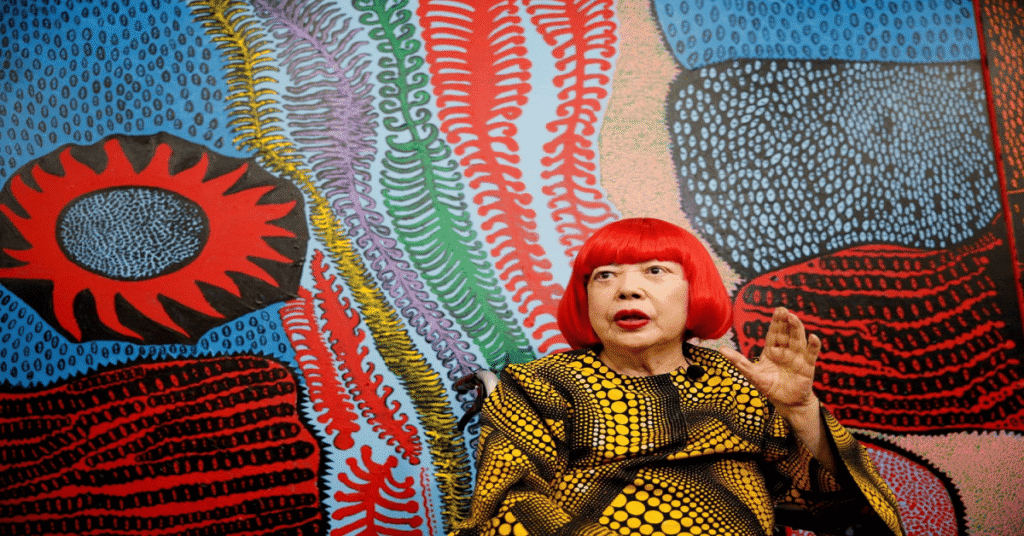
Yayoi Kusama is one of the most recognizable contemporary artists in the world. Her art is famous for its repeated dots, mirrored rooms, pumpkins, bold colors, and immersive installations that seem to stretch beyond the limits of ordinary space. Over a career spanning more than seven decades, she has developed a distinctive visual language that has influenced contemporary art, fashion, design, and popular culture.
What makes Yayoi Kusama especially interesting is that her work is not simply about attractive patterns. Repetition, infinity, self-obliteration, nature, identity, and the relationship between the individual and the universe are central ideas in her artistic practice. Her installations invite viewers to become part of the artwork, often creating an experience that feels both beautiful and mysterious.
From her childhood in Japan to her years in New York and her return to Japan, her journey has been unusual. She faced resistance from her family, financial difficulties, cultural barriers, and the challenges of being a woman working in a male-dominated art world. Despite those obstacles, she created an artistic identity that eventually became internationally celebrated.
Who Is Yayoi Kusama?
Yayoi Kusama is a Japanese contemporary artist known for paintings, sculptures, installations, performances, films, fashion collaborations, and literary works. She was born on March 22, 1929, in Matsumoto, Nagano Prefecture, Japan.
Her artistic career began at a young age. She was interested in drawing and painting as a child, but her path was not straightforward. Japan’s traditional art environment did not always provide the freedom she wanted, and she eventually looked toward the international art scene for new possibilities.
Over time, Yayoi Kusama became associated with several major artistic movements and ideas, including avant-garde art, minimalism, pop art, performance art, and installation art. However, her work does not fit neatly into a single category. Instead, she developed a highly personal style based on repetition and patterns.
Her signature polka dots became one of the most recognizable motifs in contemporary art. She has used dots on paintings, sculptures, rooms, furniture, clothing, and even entire environments.
Early Life of Yayoi Kusama
Yayoi Kusama grew up in Matsumoto, Japan. Her childhood experiences played an important role in the development of her artistic imagination.
As a young girl, Kusama experienced vivid visual phenomena and intense perceptions. She later described experiences in which patterns seemed to cover surfaces and objects around her. These experiences became connected to the repetitive forms that appeared throughout her later work.
Art provided her with a way to express these experiences. She began making drawings and paintings while still young.
Her family, however, did not necessarily see art as a stable career. Kusama eventually decided that she needed to pursue her artistic ambitions beyond Japan. She became particularly interested in the work being produced in Europe and the United States.
She corresponded with American artist Georgia O’Keeffe and eventually received encouragement that strengthened her desire to travel to the United States.
Yayoi Kusama in New York
In 1957, Kusama moved to the United States. She first spent time in Seattle before moving to New York City.
New York’s art scene was highly competitive, but it also provided Kusama with opportunities to experiment. She worked on large-scale paintings featuring thousands of repeated marks. These works became known as her Infinity Net paintings.
The Infinity Nets were visually simple but physically demanding to create. Kusama repeatedly covered canvases with small arcs and loops, creating surfaces that appeared to continue indefinitely.
The concept of repetition became a foundation of her work.
At a time when many artists were exploring new approaches to painting, Kusama’s enormous canvases stood out because of their obsessive repetition. Her work attracted attention from artists and critics, although recognition did not come easily.
She interacted with important figures in the New York art world and participated in experimental artistic activities. Her work eventually became connected with the broader development of avant-garde and minimalist practices.
What Are Yayoi Kusama’s Infinity Nets?
The Infinity Nets are among the most important bodies of work created by Yayoi Kusama.
These paintings generally consist of repeated small loops, arcs, or marks that cover the entire surface. Instead of presenting a traditional central subject, the paintings create an almost endless visual field.
The viewer may initially see a simple pattern, but closer examination reveals the enormous amount of labor involved. Each mark contributes to a larger network.
The idea of infinity is important here. Kusama removes the conventional boundaries of the painting by creating patterns that appear capable of continuing beyond the canvas.
The paintings can also create a sense of calm, obsession, movement, or even visual uncertainty. Depending on the viewer, the same work may appear peaceful or overwhelming.
The Meaning of Polka Dots
Polka dots are perhaps the most recognizable feature of Yayoi Kusama‘s art.
For Kusama, dots are more than decoration. They can represent repetition, infinity, individual identity, and the relationship between a single person and the larger universe.
Imagine one small dot surrounded by thousands of other dots. The individual dot is still present, but it becomes part of something much larger.
This idea connects with Kusama’s concept of self-obliteration. By repeating patterns across bodies, objects, rooms, and landscapes, individual forms can appear to disappear into their surroundings.
The result is an artistic experience in which boundaries become difficult to identify.
Where does the person end and the artwork begin? Where does one object end and another begin?
These questions are central to understanding Kusama’s use of repetition.
Yayoi Kusama and Infinity Mirror Rooms
The Infinity Mirror Rooms have become some of Kusama’s most popular works.
These immersive installations use mirrors, lights, and repeated objects to create environments that seem to continue forever. When viewers enter one of these rooms, reflections multiply the visible space.
A relatively small physical room can therefore appear enormous.
The experience is different from looking at a painting in a gallery. Instead of standing outside the artwork, visitors become part of it.
Mirrors reflect the viewer, lights, objects, and other reflections. The resulting environment can create the illusion of endless depth.
The Infinity Mirror Rooms also demonstrate how Kusama transformed repetition from a two-dimensional painting technique into an immersive spatial experience.
Pumpkin Sculptures by Yayoi Kusama
Pumpkins are another important symbol in Kusama’s career.
Her pumpkin sculptures are often covered in black dots and feature exaggerated forms. Yellow pumpkins with black patterns have become particularly associated with her work.
Kusama has spoken positively about pumpkins and has described her fascination with their shape and character.
Unlike some of her more abstract works, pumpkins can feel playful and approachable. Their recognizable form allows visitors to connect with the sculpture immediately.
At the same time, the repeated dots transform the ordinary pumpkin into something distinctly Kusama.
Her pumpkins have appeared in galleries, museums, outdoor installations, and public spaces around the world.
Yayoi Kusama’s Artistic Style
The style of Yayoi Kusama is difficult to mistake for anyone else’s.
Several recurring characteristics define her work:
- Polka dots
- Repetition
- Mirrors
- Infinity
- Bright colors
- Organic forms
- Sculptural environments
- Reflective surfaces
- Repeated patterns
- Immersive installations
However, her work is not limited to one visual style.
Some paintings are monochromatic and restrained, while other installations are intensely colorful. Some sculptures appear playful, while other works create an unsettling or mysterious atmosphere.
This variety demonstrates the breadth of Kusama’s artistic practice.
Yayoi Kusama and Self-Obliteration
Self-obliteration is one of the most important concepts associated with Kusama’s work.
The term describes the process through which individual boundaries appear to disappear into repeated patterns or larger environments.
For example, when dots cover a sculpture, the original shape remains visible, but the pattern changes the way we perceive it. When dots cover an entire room, walls, objects, and people can appear visually connected.
The concept can be understood as a tension between individuality and infinity.
A person is physically small compared with the universe. Kusama’s repeated forms can make viewers feel both insignificant and connected to something much larger.
This idea gives her apparently simple patterns a deeper conceptual dimension.
Major Themes in Yayoi Kusama’s Art
Several themes appear repeatedly throughout Kusama’s career.
Infinity
Infinity is perhaps her most recognizable concept. Repeated dots, mirrors, and patterns allow finite spaces to appear endless.
Repetition
Repetition is both a visual technique and a conceptual idea. Kusama often repeats forms thousands of times, turning individual elements into enormous fields.
Identity
Her work frequently explores the relationship between the individual and the surrounding world.
Nature
Flowers, pumpkins, organic shapes, and natural forms appear throughout her career. She often transforms familiar elements into surreal environments.
Space
Kusama’s installations challenge ordinary ideas about physical space. Mirrors and repetition can make a small room appear infinite.
Obsession
Repetition can also suggest obsessive behavior. The physical labor required to repeat the same mark again and again becomes part of the meaning of the work.
Yayoi Kusama’s Influence on Contemporary Art
Kusama’s influence extends far beyond her own exhibitions.
She helped demonstrate how installation art could become an immersive experience rather than something viewers simply observe from a distance.
Her work also anticipated many aspects of today’s experience-driven cultural environment. Visitors often photograph themselves inside her installations and share those images online.
This has contributed to her enormous popularity among younger audiences.
However, her significance cannot be reduced to social media popularity. Kusama was experimenting with repetition, immersive environments, performance, and conceptual ideas decades before social media existed.
Her work helped expand the possibilities of what an artwork could be.
A painting could become an environment. A sculpture could become an experience. A room could become an artwork. A visitor could become part of the composition.
Yayoi Kusama and Fashion
Kusama’s distinctive visual identity has also influenced fashion.
Her recognizable dots and bold patterns have appeared in collaborations with major fashion brands and designers. These collaborations introduced her visual language to audiences who might not normally visit contemporary art museums.
The connection between fashion and Kusama’s art is natural because both rely heavily on surfaces, patterns, color, repetition, and visual identity.
Her collaboration with Louis Vuitton became particularly well known. The partnership brought her signature dots and artistic imagery into clothing, accessories, store interiors, and other products.
This helped demonstrate how contemporary art could cross into popular culture without losing its recognizable identity.
Yayoi Kusama’s Literary Work
Kusama is not only an artist. She has also written novels, poetry, autobiographical material, and other literary works.
Writing has provided another method through which she can explore themes of identity, isolation, relationships, creativity, and the human condition.
Her literary career also reflects her broader artistic personality. She has never limited herself to one medium.
Painting, sculpture, installation, performance, film, fashion, and literature have all formed parts of her creative world.
Yayoi Kusama’s Major Exhibitions
Over the years, Kusama’s work has been displayed by major museums and galleries around the world.
Her exhibitions have attracted huge audiences because they combine conceptual ideas with visually powerful experiences.
The Infinity Mirror Rooms in particular have become highly sought-after museum attractions.
Visitors often wait in line to experience the installations for a limited amount of time. The popularity of these exhibitions reflects the unusual ability of Kusama’s work to appeal to both experienced art audiences and people encountering contemporary art for the first time.
Her exhibitions have also helped make installation art more accessible to the general public.
Why Is Yayoi Kusama So Popular?
There is no single reason for Kusama’s popularity.
Her work is visually distinctive, easy to recognize, highly immersive, and conceptually rich.
The colorful dots and mirrored rooms immediately attract attention, while the underlying ideas encourage deeper interpretation.
Another reason is accessibility. A viewer does not need extensive knowledge of art history to have an emotional response to an Infinity Mirror Room.
Someone may simply see a beautiful field of lights reflected endlessly around them. Another visitor may interpret the same environment as a meditation on infinity, identity, or the relationship between humans and the universe.
Both responses are valid.
Kusama’s art works on multiple levels, which helps explain its broad international appeal.
Yayoi Kusama’s Legacy
Yayoi Kusama has established a remarkable legacy in contemporary art.
She spent much of her career developing ideas that were initially difficult for mainstream audiences to understand. Over time, those ideas became central to her public identity.
Her work has influenced artists, designers, photographers, fashion creators, museums, and popular culture.
Perhaps her greatest contribution is the way she transformed repetition into a complete artistic language.
Dots became more than dots. Mirrors became more than reflective surfaces. Rooms became more than architecture.
Through these elements, Kusama created environments that encourage viewers to reconsider themselves and the space around them.
The Continuing Importance of Yayoi Kusama
Even after decades of artistic activity, Kusama’s work continues to attract new audiences.
Her career demonstrates that an artist does not necessarily need to follow changing trends to remain relevant. Instead, a strong personal vision can become more powerful with time.
The recurring motifs in her art have remained recognizable, but their presentation has evolved.
From early paintings to enormous installations, Kusama has repeatedly found new ways to explore the same fundamental questions.
What is the individual?
What does infinity mean?
Where are the boundaries between ourselves and the world?
Can repetition change the way we perceive reality?
These questions help explain why her work continues to generate discussion.
Conclusion
Yayoi Kusama is much more than the artist behind famous polka dots and mirrored rooms. She is a pioneering contemporary artist whose career has been built around repetition, infinity, identity, nature, and the disappearance of boundaries.
From her early life in Japan to her experiences in New York and her international recognition, her journey has been extraordinary. Her Infinity Nets, pumpkins, polka-dot environments, and Infinity Mirror Rooms have become important examples of how contemporary art can transform ordinary visual elements into powerful experiences.
The lasting appeal of Yayoi Kusama comes from the combination of simplicity and complexity in her work. A dot is simple. A mirror is familiar. A pumpkin is ordinary. Yet when these elements are repeated and transformed, they can create environments that feel endless.
That ability to turn familiar things into unfamiliar experiences is one of the reasons Yayoi Kusama remains one of the most influential and recognizable artists of the modern era.
FAQs About Yayoi Kusama
1. Who is Yayoi Kusama?
Yayoi Kusama is a Japanese contemporary artist born in 1929. She is internationally known for her polka dots, Infinity Mirror Rooms, Infinity Net paintings, pumpkins, sculptures, and immersive installations.
2. What is Yayoi Kusama famous for?
Yayoi Kusama is especially famous for her repeated polka-dot patterns, Infinity Mirror Rooms, Infinity Net paintings, pumpkin sculptures, and installations exploring infinity, repetition, and self-obliteration.
3. What do Yayoi Kusama’s dots mean?
Kusama’s dots can represent infinity, repetition, the universe, and the disappearance of individual boundaries. They are a recurring visual and conceptual element throughout her career.
4. What are Yayoi Kusama’s Infinity Mirror Rooms?
Infinity Mirror Rooms are immersive installations that use mirrors, lights, and repeated objects to create the illusion of endless space. Visitors enter the installations and become part of the visual experience.
5. Why is Yayoi Kusama important?
Yayoi Kusama is important because she expanded the possibilities of contemporary art through repetition, immersive installations, performance, sculpture, painting, and conceptual ideas. Her work has influenced contemporary culture far beyond traditional galleries and museums.

I am a professional content writer and SEO specialist with experience in creating well-researched, accurate, and user-focused content. I write about technology, business, finance, automotive, lifestyle, and trending news. My goal is to provide readers with reliable, up-to-date, and easy-to-understand information while following Google’s content quality and editorial best practices.