Wisconsin Governor Race: Tiffany & GOP Show Strong Promise
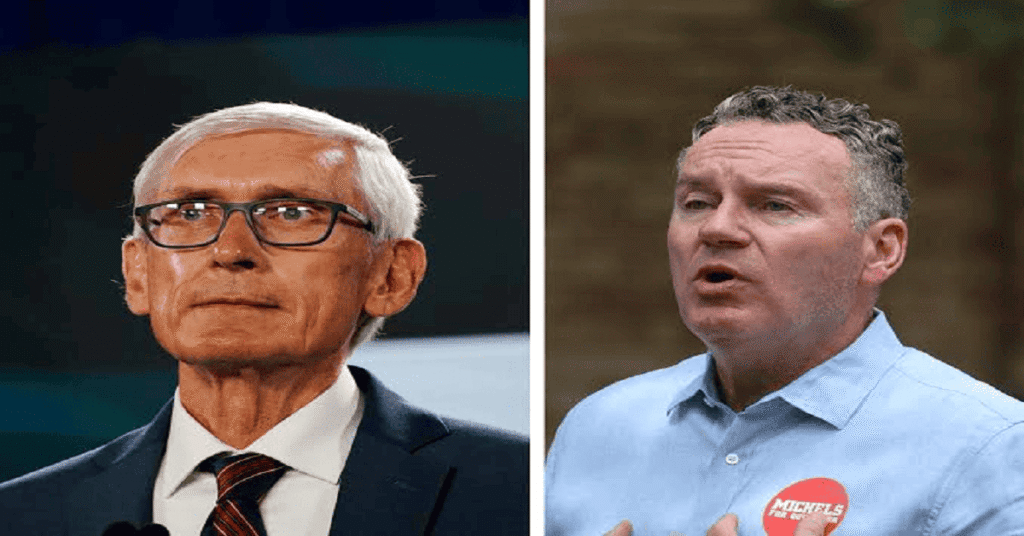
The Wisconsin governor race is shaping up to be one of the most closely watched statewide contests of the 2026 election cycle. The race is especially important because Wisconsin remains one of the country’s most competitive political battlegrounds, and voters will choose a new governor for the first time in years without Tony Evers on the ballot.
Governor Tony Evers announced in 2025 that he would not seek another term. His decision immediately changed the political landscape and opened the door for a competitive Democratic primary. Republicans, meanwhile, have been working to take advantage of the open seat and make the governor’s office a major target.
The Wisconsin governor race will begin to take clearer shape after the August 11 primary. The general election is scheduled for November 3, 2026.
With the primary only days away, voters are paying close attention to the candidates, their policy positions, polling numbers and the issues that could determine the final result.
Why the Wisconsin Governor Race Matters
The Wisconsin governor race matters beyond Madison and Milwaukee because the state is widely viewed as a national political battleground. Presidential elections in Wisconsin have often been decided by extremely narrow margins, making statewide elections particularly significant.
The governor also has an important role in shaping the state’s budget, education policy, economic development strategy, environmental regulations and relationship with the Republican-controlled legislature.
For Democrats, retaining the governor’s office would mean maintaining an important check on Republican power in the state. For Republicans, winning the race would give the party an opportunity to strengthen its position in Wisconsin state government.
That makes the 2026 Wisconsin governor race much more than a personality contest. The result could influence policy decisions for years.
When Is the Wisconsin Governor Election?
The Democratic and Republican primaries are scheduled for August 11, 2026. The winners of those primaries will move forward to the general election on November 3, 2026. Wisconsin uses partisan primaries and does not have a separate runoff election for governor.
The primary is especially important this year because the Democratic field has experienced several major changes. Candidates have withdrawn, campaigns have changed direction and new alliances have emerged.
As a result, the final weeks before the primary have become unusually important in the Wisconsin governor race.
Tony Evers and the Open Governor’s Seat
Tony Evers has served as Wisconsin’s governor since 2019. His decision not to run for another term created the state’s first wide-open governor contest since 2010, according to local election coverage.
Evers’ departure means that neither major party has an incumbent governor defending the position.
For Democrats, that creates both an opportunity and a challenge. Evers has been a well-known figure in Wisconsin politics, and Democrats now have to decide which candidate can best carry the party into the general election.
Evers has endorsed Milwaukee County Executive David Crowley, making the Democratic primary even more interesting. His involvement has turned the contest into a debate over the direction of the Democratic Party and what kind of candidate can compete statewide.
Democratic Candidates in the Wisconsin Governor Race
The Democratic primary has attracted several prominent candidates, but the field has changed significantly during the campaign.
Among the Democrats still attracting attention are David Crowley, Francesca Hong, Joel Brennan and Kelda Roys. Former Lieutenant Governor Mandela Barnes also had been one of the best-known candidates, but he withdrew from the race shortly before the primary.
Sara Rodriguez and Missy Hughes also left the contest earlier in the campaign.
The official ballot materials initially listed several Democratic candidates, including Crowley, Rodriguez, Brennan, Hong, Roys, Hughes and Barnes. However, candidates can withdraw after appearing on ballot materials, which is one reason the current race looks different from the original field.
Francesca Hong
Francesca Hong has emerged as one of the most important figures in the Democratic primary. The state representative has built support around a progressive platform and grassroots campaign strategy.
Hong’s rise has been one of the major stories of the Wisconsin governor race. Recent polling showed her leading the Democratic field, although a large number of voters remained undecided.
A Marquette Law School poll conducted in July found Hong with 26% among Democratic primary voters, while Mandela Barnes had 15%. Joel Brennan had 2% and Kelda Roys had 1%. The poll also found that 45% of respondents were undecided.
Because that survey was conducted before several later developments, its numbers should not be treated as a prediction of the final primary result.
Hong’s biggest challenge could come after the primary. If she wins the Democratic nomination, Republicans are likely to make her progressive record a major part of the general election campaign.
David Crowley
David Crowley, the Milwaukee County Executive, is another major name in the Wisconsin governor race.
Crowley brings executive experience from leading Wisconsin’s most populous county. Governor Tony Evers has endorsed him, giving his campaign an important establishment connection.
Crowley’s campaign is focused on presenting him as an experienced executive who can govern effectively and compete in a general election.
His return to the race after previously leaving it has added another layer of uncertainty to the Democratic primary. Evers has been campaigning alongside Crowley in the final stretch before the primary.
The Crowley campaign is also attempting to convince voters that Democrats need a candidate capable of winning statewide, not simply performing well among the party’s most progressive voters.
Joel Brennan
Joel Brennan, a former state cabinet secretary, is another Democratic contender.
Brennan’s experience in state government gives him a different profile from candidates whose backgrounds are primarily legislative or local government focused.
His campaign has faced a difficult path in a crowded Democratic primary. With several candidates competing for attention, fundraising, media coverage and endorsements have become especially important.
Kelda Roys
State Senator Kelda Roys is also competing in the Democratic primary.
Roys has experience in the Wisconsin Legislature and has built a profile around progressive policy issues. Her legislative record provides voters with a clear indication of how she approaches state government.
However, the crowded Democratic field has made it difficult for candidates outside the top tier to gain enough momentum.
Mandela Barnes Withdraws
Former Lieutenant Governor Mandela Barnes was once considered one of the most recognizable Democratic candidates in the Wisconsin governor race.
Barnes served as lieutenant governor and later ran for U.S. Senate in 2022. His statewide name recognition initially made him an important contender.
However, Barnes announced his withdrawal in late July. The decision came after a difficult period for his campaign and amid reports concerning allegations of inappropriate behavior. An internal review reportedly found no actionable evidence, while Barnes said it had become clear that another candidate had become the Democratic frontrunner.
His departure is significant because his supporters could influence the final outcome of the Democratic primary.
Republican Candidates in the Wisconsin Governor Race
The Republican side of the Wisconsin governor race is considerably less complicated.
Congressman Tom Tiffany is the leading Republican candidate, while Andy Manske is also on the Republican primary ballot.
Tiffany has become the clear favorite in Republican primary polling. A July Marquette Law School poll found Tiffany supported by 67% of Republican primary voters, compared with 2% for Manske. Around 30% were undecided.
Tiffany has also received support from President Donald Trump, making the national political environment an important part of his campaign.
Tom Tiffany
Tom Tiffany is a U.S. representative and the leading Republican candidate for governor.
His campaign is expected to make conservative priorities a central part of the general election debate. Republicans see the open governor’s seat as an opportunity to regain the office.
Tiffany is likely to argue that Wisconsin needs a change in direction after years of Democratic leadership.
His campaign will also attempt to connect the Democratic nominee to policies that Republican voters consider too progressive.
If Tiffany wins the Republican primary as expected, the general election campaign will quickly become a contest between two very different visions for Wisconsin.
Andy Manske
Andy Manske is also running in the Republican primary.
Manske has received substantially less support in available polling than Tiffany, making Tiffany the clear favorite for the Republican nomination.
However, primary elections can produce unexpected outcomes, especially when turnout is low or voters are less familiar with the candidates.
Recent Wisconsin Governor Race Polling
Polling has shown that the Democratic primary is much more competitive than the Republican primary.
The July Marquette survey demonstrated how uncertain the Democratic contest remained. Hong led with 26%, followed by Barnes at 15%, while Rodriguez received 11% before withdrawing. Brennan and Roys were at much lower levels. Nearly half of respondents remained undecided.
Since that survey, the race has changed dramatically.
Barnes withdrew. Rodriguez withdrew earlier. Crowley returned to the contest with Evers’ support. These developments mean that voters may have substantially different preferences by the time they vote on August 11.
That is why it is difficult to make a confident prediction about the Democratic primary.
The Role of Tony Evers
Evers remains an important figure in the Wisconsin governor race even though he is not running.
His endorsement of Crowley has created a clear choice for Democratic voters. Evers is effectively arguing that Crowley offers the experience and governing background needed to lead Wisconsin.
However, Hong’s momentum suggests that the Democratic primary is not simply a contest between establishment and grassroots candidates.
Evers recently campaigned with Crowley in an effort to strengthen his candidacy. The move demonstrates how seriously Democratic leaders view Hong’s momentum.
The effectiveness of that endorsement will become clearer on primary night.
Key Issues in the Wisconsin Governor Race
Several issues are likely to dominate the 2026 Wisconsin governor race.
Education
Education remains one of the most important issues for Wisconsin voters.
The next governor will have to deal with school funding, teacher recruitment, higher education costs and debates over how public education should be financed.
Republicans and Democrats have different approaches to education spending, school policy and state funding.
Taxes and the State Budget
Wisconsin’s budget will also be central to the campaign.
Candidates are likely to debate tax rates, government spending, business incentives and how the state should use available revenue.
The governor has significant influence over the budget process, making economic policy one of the most consequential parts of the race.
Abortion Rights
Abortion policy is another major issue.
Wisconsin’s political debate over reproductive rights has intensified in recent years, and both parties are likely to use the issue to motivate their respective bases.
Democrats are expected to emphasize reproductive freedom, while Republicans are likely to argue for stronger restrictions.
Cost of Living
Everyday expenses are also likely to matter.
Wisconsin voters are dealing with housing costs, food prices, healthcare expenses, transportation costs and other household pressures.
Candidates who can present practical solutions to affordability concerns may have an advantage among independent and swing voters.
Economic Development
Wisconsin’s economy is another major issue in the Wisconsin governor race.
The next administration will have to decide how aggressively to attract businesses, support manufacturing, invest in infrastructure and encourage new industries.
Data centers and energy needs are also becoming increasingly important in state economic discussions.
Why Wisconsin Is a Battleground State
Wisconsin has become one of the most closely watched states in American politics.
The state’s electorate is geographically divided, with major Democratic support in cities such as Milwaukee and Madison and strong Republican support across many rural communities.
Suburban voters can play a decisive role.
Academic research examining Wisconsin presidential elections has found significant regional differences in voting behavior, particularly between southeastern urban and suburban areas and other parts of the state.
The same geographic divisions could matter in the Wisconsin governor race.
A candidate does not simply need a strong base. Winning Wisconsin requires building a coalition that can perform well across cities, suburbs, small towns and rural communities.
What Could Decide the General Election?
Once the primary is finished, the Wisconsin governor race will likely become more focused.
The Democratic nominee will need to unite voters who supported different candidates during the primary.
This could be especially important if Hong wins. Her progressive supporters may be highly motivated, but Democrats would also need to appeal to moderate and independent voters.
If Crowley wins, Republicans are likely to argue that he represents the continuation of the Evers administration.
For Republicans, Tiffany’s biggest challenge will be demonstrating that he can appeal beyond the party’s strongest conservative voters.
The general election could ultimately come down to turnout, independent voters and the ability of each campaign to define its opponent.
Wisconsin Governor Race and the National Political Landscape
Although the election is about Wisconsin, national politics will inevitably influence the campaign.
Trump’s involvement in the Republican primary means national Republican politics will remain part of the conversation.
Democrats, meanwhile, are likely to use the race to present Wisconsin as a place where voters can push back against Republican policies at the state and national levels.
But Wisconsin voters have historically shown that they can split their tickets and make decisions based on state-specific issues.
That means national political trends alone will not determine the outcome.
What Happens Next?
The immediate focus is the August 11 primary.
Democratic voters will choose their nominee from a rapidly changing field, while Republicans will decide whether Tiffany or Manske will represent the party.
The general election will then take place on November 3.
The Wisconsin Elections Commission’s candidate materials list the general election date as November 3, 2026.
After the primaries, campaigns will have less than three months to build statewide organizations, raise money, define their opponents and persuade undecided voters.
That period could be extremely intense.
Final Thoughts on the Wisconsin Governor Race
The 2026 Wisconsin governor race is one of the most unpredictable statewide contests of the year.
Tony Evers’ decision not to seek another term has created an open-seat election with no incumbent on the ballot. Democrats have experienced a turbulent primary, with several candidates leaving the contest and Francesca Hong gaining significant attention.
Republicans appear to have a clearer path, with Tom Tiffany holding a substantial advantage in the Republican primary.
Still, winning a primary and winning the general election are two very different challenges.
The eventual Democratic nominee will need to unite the party while also appealing to independents and moderate voters. The Republican nominee will have to convince voters that the GOP should control the governor’s office.
With Wisconsin’s history as a battleground state, neither side can take victory for granted.
The biggest question in the Wisconsin governor race is therefore not simply who wins the August primary. It is whether the eventual nominee can build a statewide coalition strong enough to win in November.
For voters, the coming weeks will provide the clearest picture yet of where Wisconsin’s political future may be heading.
FAQs About the Wisconsin Governor Race
When is the Wisconsin governor race in 2026?
The Wisconsin gubernatorial primary is scheduled for August 11, 2026, and the general election will be held on November 3, 2026.
Is Tony Evers running for governor again?
No. Democratic Governor Tony Evers announced that he would not seek another term in 2026, creating an open governor’s race in Wisconsin.
Who are the main candidates in the Wisconsin governor race?
The Democratic field has included Francesca Hong, David Crowley, Joel Brennan, Kelda Roys, Mandela Barnes, Sara Rodriguez and Missy Hughes, although Barnes, Rodriguez and Hughes have withdrawn. Republicans include Tom Tiffany and Andy Manske.
Who is leading the Democratic primary?
Recent polling has shown Francesca Hong leading the Democratic primary, although a large percentage of voters have remained undecided. The political situation has changed since the latest major polls, so the numbers should not be considered a final prediction.
Who is leading the Republican primary?
Tom Tiffany has been the clear Republican favorite in available polling. A July Marquette Law School poll showed him with 67% support among Republican primary voters, compared with 2% for Andy Manske.
Did Mandela Barnes drop out of the Wisconsin governor race?
Yes. Mandela Barnes withdrew from the Democratic primary in late July 2026. His withdrawal significantly changed the Democratic contest just before the August 11 primary.
Did Sara Rodriguez withdraw from the race?
Yes. Lieutenant Governor Sara Rodriguez withdrew from the Democratic governor primary. Her name may still appear on some ballot materials because ballots had already been prepared before her withdrawal.
Did Missy Hughes withdraw?
Yes. Missy Hughes suspended her campaign in June and endorsed Sara Rodriguez. Her name was included on earlier official ballot materials even though she later suspended her campaign.
Who is Tony Evers supporting?
Tony Evers has endorsed Milwaukee County Executive David Crowley for governor. Evers has also campaigned with Crowley as the Democratic primary approaches.
When will the next governor of Wisconsin be elected?
The next governor will be chosen in the November 3, 2026 general election. The winner will replace Tony Evers after his term ends.
Why is the Wisconsin governor race important?
The election is important because Wisconsin is a major political battleground and the governor has substantial influence over the state budget, education, economic policy, executive agencies and other major issues.
Can the Wisconsin governor race affect national politics?
Yes. Wisconsin is an important swing state, so the governor’s race will attract national attention and political spending. However, the result will ultimately depend on Wisconsin voters and state-level issues as much as national politics.

I am a professional content writer and SEO specialist with experience in creating well-researched, accurate, and user-focused content. I write about technology, business, finance, automotive, lifestyle, and trending news. My goal is to provide readers with reliable, up-to-date, and easy-to-understand information while following Google’s content quality and editorial best practices.