World Cup 2026 Guide: Qualified Teams, Star Players & Match Schedule
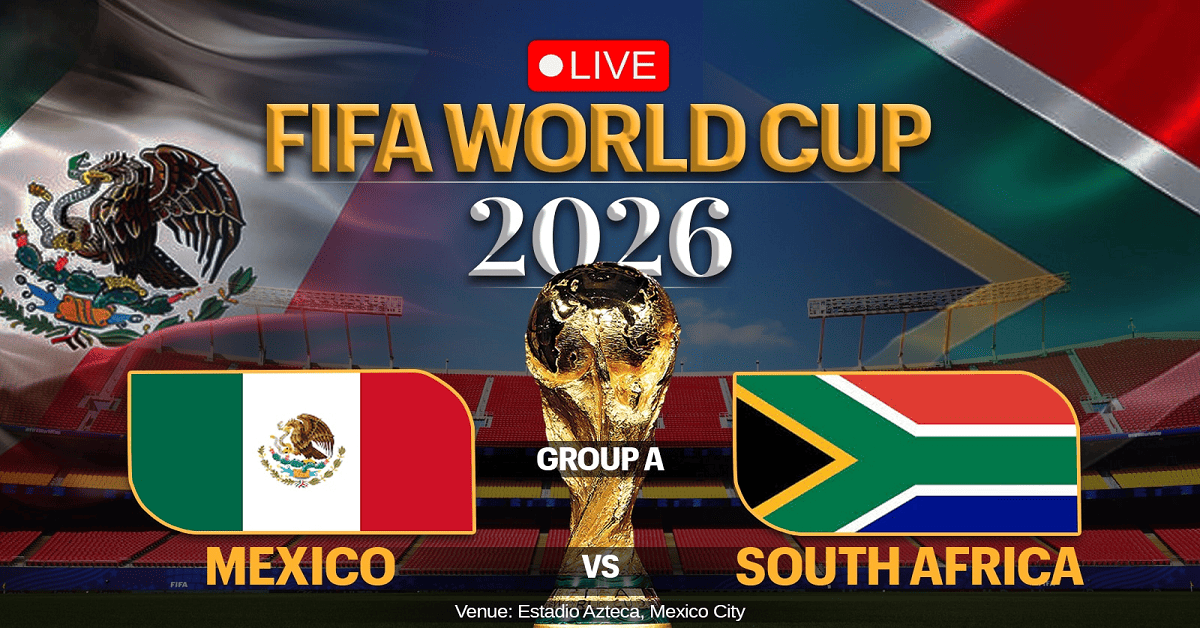
The FIFA World Cup 2026 qualifiers have become one of the most exciting football competitions in recent years. With the FIFA World Cup expanding to 48 teams for the first time, nations from every continent have a greater opportunity to earn a place in football’s biggest tournament. Fans across the globe are closely following the FIFA World Cup 2026 qualifiers as national teams battle for qualification spots and dream of competing on the world stage.
The 2026 FIFA World Cup will be hosted jointly by the United States, Canada, and Mexico. Since these three countries automatically qualify as hosts, the remaining nations must secure their place through the FIFA World Cup 2026 qualifiers. The qualification campaign involves hundreds of matches played across multiple confederations, making it one of the largest sporting events before the World Cup itself.
This guide explains everything you need to know about the FIFA World Cup 2026 qualifiers, including the qualification format, participating confederations, key teams, star players, and what fans can expect in the lead-up to the tournament.
What Are the FIFA World Cup 2026 Qualifiers?
The FIFA World Cup qualifiers are a series of international matches that determine which teams qualify for the World Cup finals. Every FIFA member nation has the opportunity to participate, provided they meet eligibility requirements and are not suspended.
The FIFA World Cup 2026 qualifiers are especially significant because the tournament has expanded from 32 teams to 48 teams. This increase creates more qualification spots and gives emerging football nations a better chance of reaching the finals.
Qualification matches are organized by FIFA’s six continental confederations. Each confederation has its own format and qualification process. Teams compete over several rounds, and successful nations secure direct qualification or advance through intercontinental playoffs.
Expansion of the 2026 FIFA World Cup
One of the biggest changes affecting the FIFA World Cup 2026 qualifiers is the expansion to 48 participating teams.
Previously, only 32 nations competed in the final tournament. The increase to 48 teams means additional qualification spots are available across every confederation.
This expansion offers several benefits:
- More countries can participate in the World Cup.
- Emerging football nations gain greater opportunities.
- Qualification campaigns become more competitive.
- Fans from more regions can support their teams in the finals.
- Football development programs receive stronger incentives.
As a result, the FIFA World Cup 2026 qualifiers have attracted attention from countries that previously faced difficult qualification odds.
FIFA Confederations Participating in the Qualifiers
The FIFA World Cup 2026 qualifiers are divided among six football confederations.
AFC (Asia)
The Asian Football Confederation includes countries such as Japan, South Korea, Saudi Arabia, Australia, Iran, Qatar, and many others.
Asia receives more qualification spots than in previous tournaments due to the expansion. This has increased competition and excitement throughout the region.
CAF (Africa)
African football continues to grow rapidly. Nations such as Morocco, Senegal, Nigeria, Egypt, Algeria, and Ghana are among the strongest contenders.
The FIFA World Cup 2026 qualifiers provide Africa with more representation than ever before, creating opportunities for rising teams.
CONCACAF (North, Central America, and Caribbean)
Since the United States, Canada, and Mexico are hosts, they qualify automatically.
Other nations including Costa Rica, Jamaica, Panama, Honduras, and Trinidad and Tobago compete for remaining spots through the FIFA World Cup 2026 qualifiers.
CONMEBOL (South America)
South American qualification is often considered one of the toughest in world football.
Traditional powers such as Brazil, Argentina, Uruguay, Colombia, and Ecuador compete in a round-robin format that tests consistency over many matches.
OFC (Oceania)
The Oceania Football Confederation receives greater opportunities under the expanded format.
Countries like New Zealand aim to take advantage of the increased number of qualification spots.
UEFA (Europe)
European football remains highly competitive with countries such as England, France, Germany, Spain, Italy, Portugal, and the Netherlands competing for qualification.
The UEFA section of the FIFA World Cup 2026 qualifiers includes multiple groups and playoff rounds.
Qualification Format Explained
Each confederation uses a different format for the FIFA World Cup 2026 qualifiers.
Most qualification systems involve:
- Group stages
- Home-and-away matches
- Points-based standings
- Knockout rounds
- Playoff competitions
Teams earn points through victories and draws. The highest-ranked teams advance while lower-ranked teams are eliminated.
Some confederations use direct qualification systems, while others rely on playoffs to determine final participants.
The exact structure varies by region but follows FIFA guidelines to ensure fairness and competitiveness.
Importance of the FIFA World Cup 2026 Qualifiers
The FIFA World Cup 2026 qualifiers are about much more than simply reaching the tournament.
Qualification affects:
- National pride
- FIFA rankings
- Sponsorship opportunities
- Football development funding
- International recognition
For smaller football nations, qualifying for the World Cup can transform the sport domestically. Increased media coverage, investment, and youth participation often follow successful qualification campaigns.
The qualifiers also provide valuable experience for players and coaches competing at the international level.
Top Teams to Watch
Several nations are expected to dominate the FIFA World Cup 2026 qualifiers.
Argentina
The reigning world champions continue to perform at a high level. Argentina possesses a strong squad capable of competing against any team.
Brazil
Brazil remains one of football’s most successful nations. Their qualification campaigns are typically strong due to exceptional depth and talent.
France
France consistently produces world-class players and enters every qualification cycle as a favorite.
England
England has developed a balanced squad featuring experienced stars and promising young talents.
Spain
Spain’s possession-based football continues to make them a serious contender during qualification campaigns.
Germany
Germany’s rich football tradition ensures they remain among Europe’s strongest teams.
Japan
Japan has established itself as one of Asia’s leading football nations and continues to impress on the global stage.
Morocco
After their historic achievements at recent international tournaments, Morocco is expected to remain highly competitive.
Rising Nations in the FIFA World Cup 2026 Qualifiers
While traditional powers attract most attention, several emerging nations could make headlines.
Countries such as Uzbekistan, Jordan, Mali, Burkina Faso, Venezuela, and New Zealand have shown significant improvement.
The expanded tournament structure means these nations have a realistic chance of qualifying and making history.
Many football analysts believe the FIFA World Cup 2026 qualifiers could produce more surprise qualifiers than any previous cycle.
Key Players to Follow
The FIFA World Cup 2026 qualifiers feature some of the world’s best footballers.
Fans are watching established stars as well as emerging talents.
Important players include:
- Kylian Mbappé
- Jude Bellingham
- Vinicius Junior
- Erling Haaland
- Bukayo Saka
- Jamal Musiala
- Rodrygo
- Federico Valverde
These players have the ability to influence qualification campaigns through match-winning performances.
Young stars are also using the FIFA World Cup 2026 qualifiers as an opportunity to establish themselves internationally.
Challenges Teams Face During Qualification
Qualifying for the World Cup is never easy.
Teams face numerous challenges, including:
Travel Demands
Long-distance travel can affect player fitness and preparation.
Injuries
Key injuries can significantly impact qualification campaigns.
Fixture Congestion
Players often balance club commitments alongside international duties.
Difficult Away Matches
Hostile atmospheres and unfamiliar conditions create additional challenges.
Pressure
The expectation to qualify can place enormous pressure on players, coaches, and football associations.
Managing these factors effectively often determines success during the FIFA World Cup 2026 qualifiers.
Impact of Technology on Qualification Matches
Technology plays a major role in modern football.
The FIFA World Cup 2026 qualifiers benefit from:
- Video Assistant Referee (VAR)
- Goal-line technology
- Advanced performance analytics
- GPS tracking systems
- Data-driven tactical analysis
These innovations help improve decision-making, player performance, and match preparation.
Technology also enhances the viewing experience for fans worldwide.
Fan Interest and Global Viewership
The FIFA World Cup 2026 qualifiers attract millions of viewers across television and digital platforms.
Supporters follow qualification matches because:
- Every game can influence standings.
- Underdog stories create excitement.
- National pride is at stake.
- Qualification races remain unpredictable.
Social media platforms have increased fan engagement, allowing supporters to discuss matches and follow developments in real time.
As qualification campaigns progress, interest continues to grow across every continent.
Economic Impact of Qualification
Successful qualification can generate substantial economic benefits.
Countries that reach the World Cup often experience:
- Increased tourism
- Higher merchandise sales
- Greater sponsorship opportunities
- Expanded media coverage
- Improved football infrastructure
For football associations, qualification provides valuable financial rewards that can support long-term development programs.
The FIFA World Cup 2026 qualifiers therefore have economic significance beyond the football field.
Predictions for the FIFA World Cup 2026 Qualifiers
Although predicting qualification outcomes is difficult, several trends are clear.
Traditional football powers are likely to secure qualification positions, but expanded tournament slots create opportunities for emerging nations.
The increased number of places means fans may see several countries qualify for the World Cup finals for the first time.
This possibility adds excitement and unpredictability to the FIFA World Cup 2026 qualifiers.
Many analysts expect greater geographic diversity in the final tournament than ever before.
Looking Ahead to the 2026 World Cup
Once qualification is complete, attention will shift to the tournament itself.
The 2026 FIFA World Cup promises to be historic because of:
- Three host nations
- Expanded 48-team format
- New qualification pathways
- Increased global participation
- Enhanced fan experiences
The FIFA World Cup 2026 qualifiers serve as the foundation for this historic event, determining which nations earn the right to compete for football’s most prestigious trophy.
Conclusion
The FIFA World Cup 2026 qualifiers represent one of the most important stages in international football. With the World Cup expanding to 48 teams, nations around the world have new opportunities to reach the biggest tournament in the sport.
From established giants like Brazil, Argentina, France, and Germany to ambitious emerging nations seeking their first appearance, the FIFA World Cup 2026 qualifiers offer drama, excitement, and unforgettable moments. Fans can expect intense competition, remarkable performances, and historic achievements as teams battle for qualification.
As the road to 2026 continues, every match becomes crucial. The FIFA World Cup 2026 qualifiers are not just about reaching the finals—they are about national pride, football development, and the dream of lifting the World Cup trophy.
FAQs
What are the FIFA World Cup 2026 qualifiers?
The FIFA World Cup 2026 qualifiers are international football competitions that determine which teams qualify for the 2026 FIFA World Cup.
How many teams will play in the 2026 FIFA World Cup?
The tournament will feature 48 teams, making it the largest FIFA World Cup in history.
Which countries are hosting the 2026 FIFA World Cup?
The tournament will be hosted by the United States, Canada, and Mexico.
Do the host nations need to participate in the qualifiers?
No. The United States, Canada, and Mexico automatically qualify as host nations.
Why are the FIFA World Cup 2026 qualifiers different from previous editions?
The qualifiers are different because the World Cup has expanded from 32 teams to 48 teams, creating additional qualification spots.
Which confederations participate in the FIFA World Cup 2026 qualifiers?
The six participating confederations are AFC, CAF, CONCACAF, CONMEBOL, OFC, and UEFA.
Can smaller nations qualify more easily for the 2026 World Cup?
The expanded format provides more opportunities, but qualification remains highly competitive.
What role does VAR play in the qualifiers?
VAR helps referees review key decisions, improving fairness and accuracy during qualification matches.
Which teams are favorites to qualify?
Traditional football powers such as Argentina, Brazil, France, England, Germany, and Spain are considered strong favorites.
Why are the FIFA World Cup 2026 qualifiers important?
They determine tournament participation, impact FIFA rankings, generate revenue, and contribute to football development worldwide.

I am a professional content writer and SEO specialist with experience in creating well-researched, accurate, and user-focused content. I write about technology, business, finance, automotive, lifestyle, and trending news. My goal is to provide readers with reliable, up-to-date, and easy-to-understand information while following Google’s content quality and editorial best practices.