Rajiv Rai Reveals Naseeruddin Shah’s Age Gap Concerns With Sonam
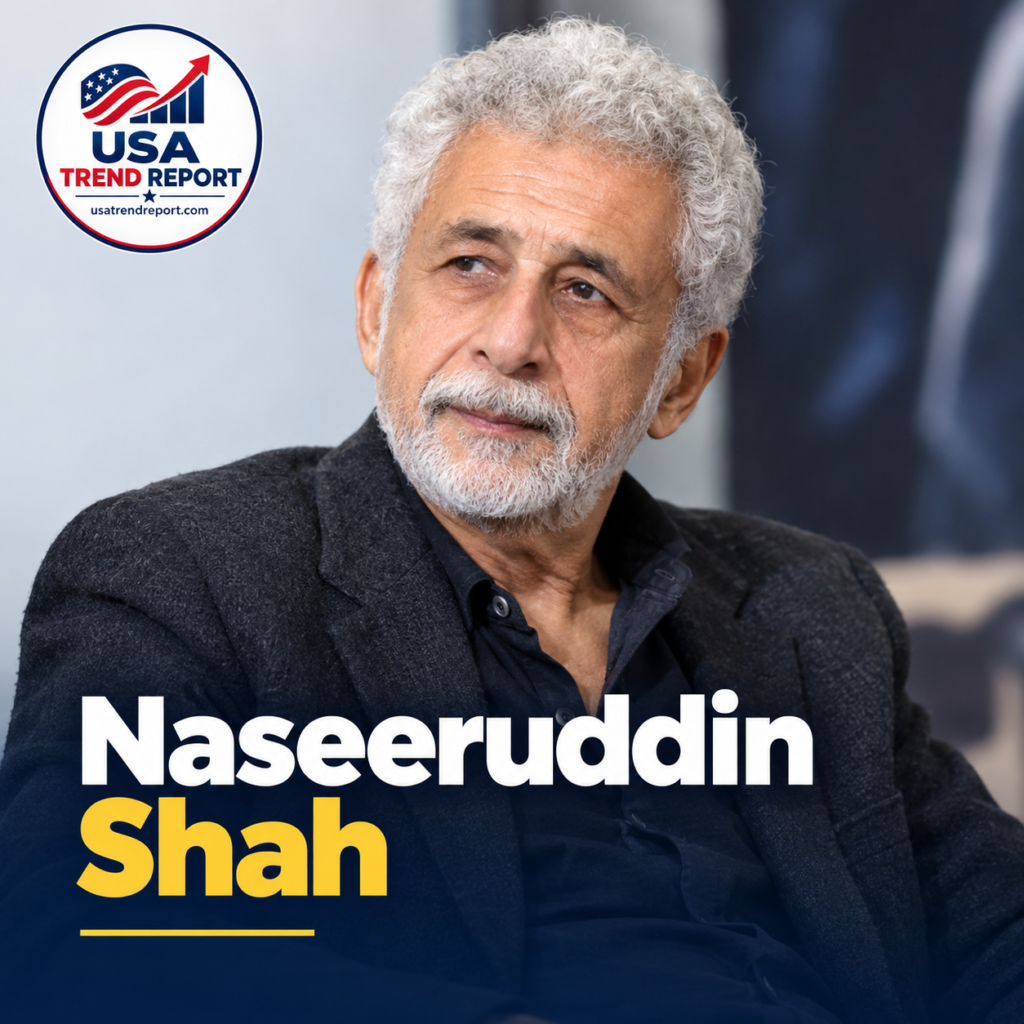
Indian cinema has produced countless talented performers, but only a few have managed to leave a lasting impression across generations. Naseeruddin Shah is undoubtedly one of them. Known for his natural acting, powerful dialogue delivery and extraordinary ability to portray complex characters, he has established himself as one of India’s most respected actors.
Unlike conventional Bollywood stars who primarily gained popularity through commercial entertainment, Shah built his reputation by choosing meaningful stories and challenging roles. From independent films to mainstream blockbusters, his performances have consistently demonstrated his understanding of human emotions.
His journey is not simply about fame or box-office success. It reflects decades of dedication to storytelling, theatre and the art of acting.
Whether audiences remember him from Jaane Bhi Do Yaaro, Masoom, Sarfarosh, Iqbal or A Wednesday!, his ability to transform into completely different characters remains remarkable.
In this article, we explore Naseeruddin Shah’s biography, early life, education, personal relationships, professional achievements, memorable films and contribution to Indian entertainment.
Who Is Naseeruddin Shah?
Naseeruddin Shah is an Indian actor and director who has worked extensively in Hindi cinema, international productions and theatre.
Born on July 20, 1950, in Barabanki, Uttar Pradesh, he is particularly associated with India’s parallel cinema movement.
Throughout his career, he has portrayed characters ranging from ordinary working-class individuals to powerful antagonists, emotional fathers, teachers and intellectuals.
His versatility has earned him numerous prestigious honours, including three National Film Awards, the Padma Shri and the Padma Bhushan.
What makes him different is his approach to acting. Rather than relying entirely on dramatic expressions, he often uses subtle gestures, realistic conversations and carefully controlled emotions to bring characters to life.
His contribution extends beyond films. As a theatre practitioner, he has played an important role in keeping stage performances relevant in modern India.
Naseeruddin Shah Age and Early Life
Naseeruddin Shah was born on July 20, 1950. As of October 2026, he is 76 years old.
He grew up in a family with historical connections to the Nawabs of Sardhana. However, his interests gradually moved towards cinema, literature and performing arts.
His educational journey included studying at St. Anselm’s in Ajmer and St. Joseph’s College in Nainital.
During his younger years, he developed a strong fascination with films. Watching different performers and observing their acting styles encouraged him to explore the entertainment industry.
Although becoming a successful actor was not an easy journey, his determination eventually helped him establish a professional career.
His early experiences also influenced his understanding of society, relationships and human behaviour, elements that later became central to many of his performances.
Education and Professional Acting Training
Unlike performers who enter the entertainment industry without formal preparation, Shah pursued professional acting education.
He graduated from Aligarh Muslim University in 1971 before attending the National School of Drama in New Delhi.
He subsequently trained at the Film and Television Institute of India (FTII), Pune.
These institutions played an important role in developing his understanding of acting techniques, theatrical traditions and cinematic storytelling.
During this period, he became associated with other aspiring performers, including Om Puri, who would also become a major figure in Indian parallel cinema.
His training helped him appreciate the difference between acting for a live audience and performing before a camera.
While theatre requires sustained energy and physical expression, cinema often captures the smallest emotional changes through close-up shots.
His ability to understand both mediums eventually became one of his greatest professional strengths.
Naseeruddin Shah’s Entry Into Indian Cinema
Every successful performer has a starting point, and Shah’s journey gained significant momentum during the 1970s.
He made his notable feature-film debut in Shyam Benegal’s Nishant, released in 1975.
The film explored rural power structures, exploitation and social injustice. Rather than following conventional commercial formulas, it focused on realistic characters and uncomfortable social questions.
This project introduced audiences to an emerging performer who could communicate complicated emotions without unnecessary theatricality.
Following this breakthrough, he became associated with several filmmakers interested in creating socially relevant cinema.
His early career coincided with a significant period in Indian filmmaking when directors were experimenting with stories outside mainstream Bollywood conventions.
For Shah, this movement provided an opportunity to explore characters that reflected ordinary people and their struggles.
Rise Through Parallel Cinema
Parallel cinema became an important chapter in Naseeruddin Shah‘s professional journey.
During the 1970s and 1980s, Indian filmmakers increasingly explored subjects such as poverty, inequality, corruption, caste discrimination and social relationships.
These productions often prioritised realistic storytelling over elaborate musical sequences or traditional hero-driven narratives.
Shah became one of the movement’s most recognisable faces.
His performances in films such as Sparsh, Aakrosh, Paar, Mandi and Mirch Masala demonstrated his willingness to accept unconventional roles.
Sparsh: A Sensitive Performance
Directed by Sai Paranjpye, Sparsh remains among his most celebrated films.
He portrayed a visually impaired school principal navigating complicated personal relationships and questions of independence.
The character required emotional sensitivity rather than exaggerated expressions.
His performance earned him the National Film Award for Best Actor.
Paar: A Powerful Social Drama
Another significant milestone arrived with Paar, directed by Gautam Ghose.
The film explored exploitation, poverty and the difficult circumstances faced by marginalised communities.
His portrayal of a struggling individual brought considerable critical recognition.
The performance earned him another National Film Award for Best Actor and international recognition at the Venice Film Festival.
Transition From Art Films to Mainstream Bollywood
Although he established his reputation through meaningful independent cinema, Naseeruddin Shah never restricted himself to a single filmmaking style.
He gradually appeared in commercial productions, proving that serious performers could succeed in mainstream entertainment.
Films such as Hum Paanch, Karma, Tridev and Mohra introduced him to wider audiences.
This transition was important because commercial Hindi cinema operated differently from the realistic filmmaking environment in which he had initially developed his reputation.
Mainstream projects often required larger-than-life characters, dramatic conflicts and energetic dialogue delivery.
However, he successfully adapted without completely abandoning his distinctive acting style.
His career demonstrated that an actor could participate in commercially successful productions while continuing to support experimental storytelling.
Best Naseeruddin Shah Movies That Every Cinema Lover Should Watch
His extensive filmography includes dramas, comedies, thrillers, romances and socially relevant productions.
Some films deserve particular attention because they showcase different aspects of his talent.
1. Jaane Bhi Do Yaaro (1983)
dontcallitbollywood.com
This satirical comedy remains one of Hindi cinema’s most memorable films.
Directed by Kundan Shah, the story follows two photographers who become involved in exposing corruption.
Its combination of humour, political commentary and absurd situations made it a cult favourite.
Shah’s performance contributed significantly to the film’s enduring appeal.
2. Masoom (1983)
Directed by Shekhar Kapur, Masoom explored family relationships, betrayal, childhood innocence and forgiveness.
Shah portrayed a married man whose past unexpectedly disrupts his family life.
His restrained performance helped communicate the character’s guilt and emotional confusion.
The film remains an excellent example of storytelling driven by relationships rather than spectacle.
3. Sarfarosh (1999)
In Sarfarosh, he portrayed Gulfam Hassan, a celebrated ghazal singer with a complicated identity.
The role required him to balance charm, sophistication and darker emotional dimensions.
His performance opposite Aamir Khan remains one of the film’s most memorable elements.
4. Monsoon Wedding (2001)
Directed by Mira Nair, Monsoon Wedding introduced international audiences to a deeply relatable Indian family story.
Shah portrayed Lalit Verma, a father managing the emotional and financial pressures surrounding his daughter’s wedding.
His performance brought warmth, humour and emotional depth to the production.
5. Iqbal (2005)
Iqbal tells the inspiring story of a young aspiring cricketer who faces significant challenges while pursuing his dreams.
Shah played Mohit, a former cricketer who becomes the young protagonist’s mentor.
His character added humour, vulnerability and emotional strength to the narrative.
The performance earned him the National Film Award for Best Supporting Actor.
6. A Wednesday! (2008)
This thriller presented him in one of his most gripping roles.
Playing an unnamed common man who challenges the authorities, he delivered an intense performance built largely around dialogue and psychological tension.
The film became particularly memorable for its examination of public frustration, security and justice.
7. Ishqiya (2010)
In Ishqiya, he appeared alongside Arshad Warsi and Vidya Balan.
The film combined romance, crime and dark humour while presenting morally complicated characters.
His performance demonstrated his ability to remain engaging even in unconventional commercial narratives.
Contribution to Indian Theatre
Cinema brought him widespread recognition, but theatre has remained central to his artistic identity.
In 1977, Naseeruddin Shah co-founded Motley Productions with Benjamin Gilani and Tom Alter.
The theatre group became associated with thoughtful productions and adaptations of significant literary works.
Its early productions included Samuel Beckett’s Waiting for Godot, staged at Prithvi Theatre in 1979.
Over the years, Shah has also worked with material by writers such as Saadat Hasan Manto and Ismat Chughtai.
His theatre work reflects an interest in language, literature and the relationship between performers and audiences.
Unlike films, stage performances provide immediate audience reactions. Actors must maintain concentration throughout an entire production without depending on editing or repeated takes.
His continued involvement in theatre has also helped introduce younger audiences to serious dramatic literature.
For aspiring actors, his stage career offers an important reminder that professional growth involves consistent practice rather than simply achieving celebrity status.
Naseeruddin Shah Wife and Family
Beyond his professional achievements, audiences have also shown considerable interest in his personal life.
He is married to acclaimed actress Ratna Pathak Shah, who is known for her performances in films, television and theatre.
The couple married in 1982 and share a longstanding association with the performing arts.
Ratna Pathak Shah has established her own distinguished acting career, appearing in productions ranging from television comedy to contemporary Hindi cinema.
Their sons, Imaad Shah and Vivaan Shah, have also pursued careers in entertainment.
Shah additionally has a daughter, Heeba Shah, from his earlier marriage.
Although several family members work in the same profession, each has developed an individual artistic identity.
Their shared interest in theatre and cinema makes the family an important presence within India’s performing arts community.
International Films and Global Recognition
Shah’s professional achievements extend beyond the Indian entertainment industry.
His ability to portray culturally diverse characters has helped him participate in international productions.
One of his most recognisable overseas appearances came in The League of Extraordinary Gentlemen (2003), where he played Captain Nemo.
The Hollywood production introduced his work to audiences who might not have been familiar with his earlier Indian films.
He also appeared in The Perfect Murder, Monsoon Wedding and the Pakistani film Khuda Ke Liye.
These projects demonstrated his ability to work across different filmmaking traditions and storytelling environments.
His international recognition was not limited to commercial productions. The acclaim surrounding Paar at the Venice Film Festival also highlighted the global relevance of his acting abilities.
His career illustrates how powerful performances can connect with audiences regardless of language or geographical boundaries.
Asia Pacific Screen Awards+1
Awards and Achievements
Throughout his distinguished career, Naseeruddin Shah has received numerous awards recognising his contribution to Indian cinema.
Some of his most notable honours include:
- National Film Award for Best Actor for Sparsh.
- National Film Award for Best Actor for Paar.
- National Film Award for Best Supporting Actor for Iqbal.
- Filmfare Best Actor recognition for performances including Aakrosh, Chakra and Masoom.
- Volpi Cup for Best Actor at the Venice Film Festival for Paar.
- Padma Shri in 1987.
- Padma Bhushan in 2003.
These achievements reflect his success across different periods of Indian filmmaking.
However, his influence cannot be measured through awards alone.
His willingness to experiment with difficult characters has encouraged filmmakers to create more substantial roles and inspired younger performers to explore unconventional career paths.
The Indian Express+1
His Work as a Director and Author
Apart from acting, Shah has explored filmmaking from behind the camera.
He made his feature-film directorial debut with Yun Hota To Kya Hota, released in 2006.
The film presented interconnected stories involving individuals whose lives take unexpected turns.
Although directing requires a different creative approach from acting, his experience as a performer gave him a valuable understanding of character development and dramatic structure.
He has also shared his personal experiences through writing.
His memoir, And Then One Day, published in 2014, provides insights into his childhood, education, relationships and professional journey.
The book offers readers an opportunity to understand the experiences behind the public personality.
Rather than presenting celebrity life as a flawless success story, it examines the complicated circumstances and personal decisions that shaped his development.
Acting Style: What Makes Him Different?
One of the most interesting aspects of Naseeruddin Shah’s career is his ability to make fictional characters appear believable.
His performances frequently rely on observation, preparation and emotional understanding.
Instead of using the same expressions in every project, he adjusts his body language, speech and reactions according to the character’s personality.
A vulnerable father in a family drama behaves differently from a threatening antagonist in a crime thriller.
Similarly, a frustrated ordinary citizen requires a completely different emotional approach from an experienced mentor.
This flexibility has helped him avoid becoming permanently associated with one particular character type.
Another distinctive feature is his command over dialogue.
Whether delivering a humorous remark or an emotionally demanding monologue, he understands how pauses, tone and timing influence audience reactions.
His theatre background is particularly visible in this aspect of his work.
For aspiring performers, studying his films can provide valuable lessons about subtle acting and the importance of understanding a character’s motivations.
Public Opinions and His Influence on Indian Cinema
Apart from his performances, Shah is known for expressing his opinions about cinema, society and artistic freedom.
His public statements have occasionally generated debate, with audiences and fellow industry members expressing different perspectives.
Nevertheless, his professional reputation remains closely connected to his dedication to acting and theatre.
He has frequently emphasised the importance of meaningful storytelling and artistic preparation throughout his career.
His influence is particularly visible in the continued appreciation of character-driven cinema.
At a time when commercial success often dominates entertainment discussions, his filmography demonstrates that realistic storytelling and memorable performances can retain their relevance for decades.
He has also helped challenge the traditional perception that leading actors must always portray heroic or glamorous characters.
Many of his most celebrated performances involve flawed, vulnerable or morally complicated individuals.
That willingness to explore human imperfections remains an important part of his artistic legacy.
Why Naseeruddin Shah Remains an Important Figure in Indian Cinema
Few actors have successfully maintained a meaningful presence across theatre, independent cinema, mainstream Bollywood and international productions.
Shah’s career stands out because he has explored all these areas without allowing one particular format to define his artistic identity.
His early films helped strengthen India’s parallel cinema movement, while his mainstream appearances brought his performances to wider audiences.
His involvement in theatre has also preserved an important connection between literary traditions and contemporary performing arts.
For younger actors, his journey offers lessons about discipline, versatility and professional preparation.
For audiences, his films provide an opportunity to experience Indian cinema beyond conventional entertainment.
His contribution ultimately represents something larger than individual stardom: a sustained commitment to the craft of acting.
Conclusion
Naseeruddin Shah has established a remarkable legacy through decades of memorable performances, professional experimentation and dedication to meaningful storytelling.
From his early appearances in parallel cinema to internationally recognised productions, he has consistently demonstrated his ability to portray diverse characters with emotional authenticity.
His contributions to theatre, filmmaking and literature further highlight the breadth of his artistic interests.
While generations of actors continue to emerge, his work remains an important reference point for understanding the evolution of Indian cinema.
His journey proves that lasting recognition does not depend entirely on commercial success. Sometimes, the greatest achievement of a performer is creating characters that audiences continue to remember long after a film ends.
Frequently Asked Questions (FAQs)
1. What is Naseeruddin Shah’s age in 2026?
Naseeruddin Shah was born on July 20, 1950, in Barabanki, Uttar Pradesh. He is 76 years old as of October 2026.
2. Who is Naseeruddin Shah’s wife?
He is married to Indian actress Ratna Pathak Shah. The couple married in 1982 and have two sons, Imaad Shah and Vivaan Shah. He also has a daughter, Heeba Shah, from his earlier marriage.
3. Which are the most famous Naseeruddin Shah movies?
Some of his most popular films include Nishant, Sparsh, Masoom, Jaane Bhi Do Yaaro, Paar, Sarfarosh, Monsoon Wedding, Iqbal, A Wednesday! and Ishqiya.
4. How many National Film Awards has Naseeruddin Shah won?
He has won three National Film Awards for acting. These include two Best Actor awards for Sparsh and Paar, and a Best Supporting Actor award for Iqbal.
5. Has Naseeruddin Shah worked in Hollywood movies?
Yes. He appeared as Captain Nemo in the Hollywood film The League of Extraordinary Gentlemen (2003). He has also worked in internationally recognised productions such as Monsoon Wedding and The Perfect Murder.

I am a professional content writer and SEO specialist with experience in creating well-researched, accurate, and user-focused content. I write about technology, business, finance, automotive, lifestyle, and trending news. My goal is to provide readers with reliable, up-to-date, and easy-to-understand information while following Google’s content quality and editorial best practices.