Yellowstone Biscuit Basin Explosion Reshapes Landscape Again
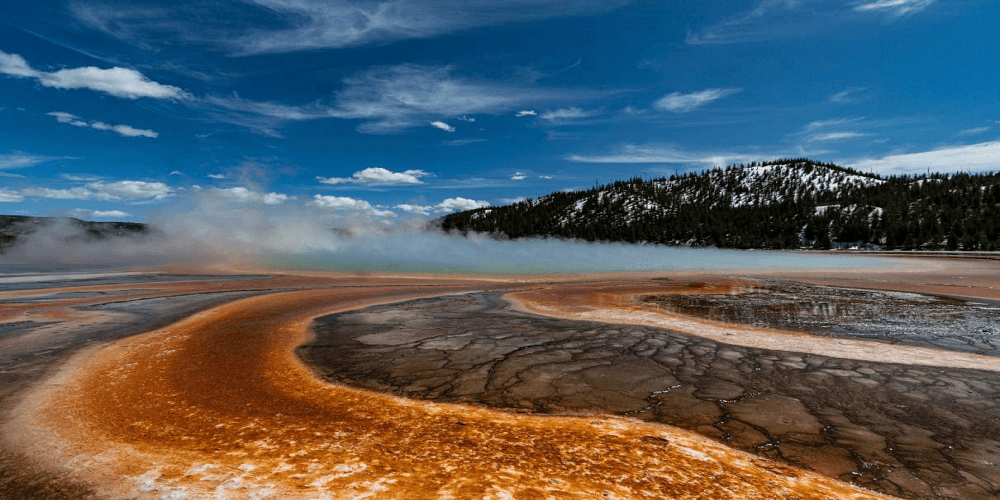
A hydrothermal explosion is one of the most powerful natural geological events that can occur in areas with significant underground heat sources. Unlike volcanic eruptions driven by magma reaching the surface, a hydrothermal explosion happens when underground water rapidly turns into steam due to extreme heat. The sudden expansion creates immense pressure, causing rocks, soil, and debris to be blasted outward.
Scientists study the hydrothermal explosion phenomenon because it can occur with little warning and poses serious risks to people, infrastructure, and natural environments. These events are often associated with geothermal regions, hot springs, geysers, and volcanic systems.
Understanding how a hydrothermal explosion develops helps researchers predict hazards and improve public safety in geothermal areas around the world.
What Is a Hydrothermal Explosion?
A hydrothermal explosion occurs when water trapped beneath the Earth’s surface becomes superheated. Under pressure, water can remain liquid even at temperatures above its normal boiling point. If the pressure suddenly decreases or the water becomes excessively heated, it rapidly converts into steam.
Steam occupies far more volume than liquid water. This sudden expansion creates tremendous force, resulting in a violent explosion that can eject rocks, mud, and hot water over large distances.
Unlike traditional volcanic eruptions, a hydrothermal explosion does not necessarily involve fresh magma reaching the surface. Instead, the event is powered primarily by heated groundwater.
How a Hydrothermal Explosion Happens
The process behind a hydrothermal explosion generally involves several stages:
Underground Heating
Magma beneath the Earth’s surface provides a constant heat source. Groundwater seeps through cracks and pores in rocks, becoming increasingly hot as it moves deeper underground.
Pressure Build-Up
The water remains trapped beneath layers of rock. High pressure prevents it from boiling despite temperatures that may exceed 100°C.
Sudden Pressure Release
An earthquake, landslide, rock fracture, or other geological change can reduce pressure on the trapped water.
Flash Conversion to Steam
When pressure drops suddenly, superheated water instantly transforms into steam.
Explosive Expansion
The rapidly expanding steam fractures surrounding rock and launches debris into the air, creating a hydrothermal explosion.
Difference Between a Hydrothermal Explosion and a Volcanic Eruption
Many people confuse a hydrothermal explosion with a volcanic eruption because both involve geological activity and explosive force.
A volcanic eruption occurs when magma, volcanic gases, and molten rock reach the Earth’s surface. In contrast, a hydrothermal explosion is primarily driven by water and steam.
Volcanic eruptions often produce lava flows and ash clouds, while a hydrothermal explosion mainly ejects steam, mud, rocks, and heated water.
Although generally smaller than major volcanic eruptions, a hydrothermal explosion can still cause significant destruction.
Geological Conditions That Favor Hydrothermal Explosions
Several geological factors increase the likelihood of a hydrothermal explosion.
Presence of Magma
A shallow magma chamber provides the heat necessary to warm underground water.
Abundant Groundwater
Water is a critical component. Regions with substantial groundwater systems are more susceptible.
Impermeable Rock Layers
Dense rock formations can trap water and steam, allowing pressure to build.
Active Fault Systems
Faults and fractures create pathways for water movement and sudden pressure changes.
Geothermal Activity
Areas known for geysers, fumaroles, and hot springs often contain conditions favorable for a hydrothermal explosion.
Famous Hydrothermal Explosion Events
Yellowstone National Park
The most well-known hydrothermal explosion events have occurred in Yellowstone. The park contains one of the world’s largest geothermal systems.
Over thousands of years, numerous explosions have formed large craters across the landscape. Some explosions created craters hundreds of meters wide.
Scientists closely monitor Yellowstone because hydrothermal activity remains active throughout the region.
New Zealand’s Waimangu Area
New Zealand has experienced several hydrothermal explosion events due to its active geothermal systems.
The Waimangu geothermal valley is famous for explosive activity associated with underground steam systems.
Iceland
Iceland’s combination of volcanic and geothermal activity makes it another location where hydrothermal explosion events can occur.
The country’s geothermal fields contain hot water reservoirs capable of generating powerful steam-driven explosions.
Warning Signs of a Hydrothermal Explosion
Predicting a hydrothermal explosion remains challenging. However, scientists watch for several warning signs.
Rising Ground Temperatures
An increase in surface heat may indicate changing underground conditions.
Increased Steam Emissions
More steam escaping from vents and geysers can signal growing pressure.
Ground Deformation
Swelling or shifting ground may suggest underground pressure accumulation.
Changes in Water Chemistry
Variations in mineral content and gas concentrations can provide clues about geothermal activity.
Seismic Activity
Small earthquakes sometimes precede a hydrothermal explosion by altering underground pressure systems.
Hazards Associated with Hydrothermal Explosions
A hydrothermal explosion can create numerous hazards.
Flying Rocks
Large rocks can be thrown hundreds of meters from the blast site.
Scalding Water
Hot water and steam can cause severe burns.
Crater Formation
Explosions often leave behind large craters that alter the landscape.
Infrastructure Damage
Roads, buildings, pipelines, and tourist facilities may be damaged or destroyed.
Environmental Impact
Vegetation and wildlife can suffer from intense heat and debris deposition.
Why Hydrothermal Explosions Are Difficult to Predict
One reason a hydrothermal explosion is so dangerous is its unpredictability.
The underground conditions responsible for pressure accumulation are often hidden from direct observation. Scientists rely on instruments to monitor temperature, seismic activity, gas emissions, and ground movement.
Even with advanced technology, exact timing remains difficult to determine because relatively small geological changes can trigger an explosion.
The Role of Geothermal Systems
Geothermal systems play a central role in hydrothermal explosion events.
These systems consist of:
- Heat from magma
- Underground water reservoirs
- Rock formations that store pressure
- Pathways for fluid movement
When these components interact under the right conditions, explosive energy can develop rapidly.
Many geothermal power regions monitor these systems carefully to reduce risks associated with unexpected steam-driven events.
Crater Formation After a Hydrothermal Explosion
One of the most visible results of a hydrothermal explosion is crater formation.
When pressure exceeds the strength of surrounding rock, the ground ruptures violently. Material is ejected outward, leaving a depression in the landscape.
The size of a crater depends on several factors:
- Amount of trapped water
- Temperature of the fluid
- Rock strength
- Depth of the reservoir
- Duration of pressure build-up
Some craters formed by a hydrothermal explosion remain visible for thousands of years.
Scientific Research on Hydrothermal Explosions
Researchers use a variety of methods to study hydrothermal explosion processes.
Satellite Monitoring
Satellites detect thermal changes and ground deformation over large areas.
Seismic Networks
Sensitive instruments record underground vibrations.
Geochemical Analysis
Scientists examine water and gas samples to identify changes in geothermal systems.
Computer Modeling
Advanced simulations help researchers understand pressure dynamics and potential hazards.
These methods improve our understanding of hydrothermal explosion behavior and support risk management efforts.
Hydrothermal Explosions and Tourism
Many geothermal attractions draw millions of visitors annually. Places such as Yellowstone, Iceland, and New Zealand are popular destinations because of their hot springs and geysers.
However, tourism in geothermal regions carries certain risks.
Park authorities implement safety measures including:
- Designated walkways
- Restricted access zones
- Warning signs
- Continuous monitoring
- Emergency response plans
Visitors should always follow safety guidelines because hydrothermal explosion events can occur with little warning.
Environmental Effects of Hydrothermal Explosions
The environmental impact of a hydrothermal explosion can vary significantly.
Short-term effects include:
- Vegetation destruction
- Soil displacement
- Wildlife disturbance
- Water contamination
Long-term effects may include:
- Formation of new habitats
- Changes in groundwater flow
- Altered geothermal features
- Modified ecosystems
While destructive initially, these events can also contribute to geological diversity and ecosystem evolution.
Modern Monitoring Technologies
Technological advances have greatly improved hydrothermal explosion monitoring.
Key technologies include:
Thermal Cameras
These devices identify unusual temperature increases.
GPS Systems
GPS measurements detect subtle ground movements.
Gas Sensors
Gas monitoring reveals changes in underground geothermal processes.
Drones
Drones provide high-resolution observations of hazardous geothermal areas.
Remote Sensing
Remote sensing technologies help scientists monitor inaccessible regions safely.
These tools enhance hazard assessment and public safety.
Future Research Directions
Scientists continue investigating hydrothermal explosion mechanisms to improve forecasting.
Future research focuses on:
- Better underground imaging techniques
- Enhanced pressure monitoring
- Artificial intelligence for pattern detection
- Improved geothermal hazard models
- Real-time monitoring systems
These advancements may eventually provide more reliable warning capabilities.
Conclusion
A hydrothermal explosion is a powerful geological event caused by the rapid conversion of superheated underground water into steam. Although different from a volcanic eruption, a hydrothermal explosion can still produce devastating effects, including crater formation, flying debris, and severe environmental damage.
Regions with active geothermal systems such as Yellowstone, Iceland, and New Zealand remain important areas for research and monitoring. Because these explosions can occur with limited warning, scientists rely on advanced technologies to track underground changes and assess potential hazards.
Understanding the science behind a hydrothermal explosion not only helps protect human lives but also deepens our knowledge of Earth’s dynamic geothermal processes.
FAQs
What is a hydrothermal explosion?
A hydrothermal explosion is a steam-driven geological explosion that occurs when superheated underground water rapidly turns into steam and releases immense pressure.
What causes a hydrothermal explosion?
The primary cause is the sudden expansion of superheated groundwater after a rapid decrease in pressure or an increase in temperature.
Is a hydrothermal explosion the same as a volcanic eruption?
No. A hydrothermal explosion is driven mainly by steam and heated water, while a volcanic eruption involves magma reaching the Earth’s surface.
Where do hydrothermal explosions occur?
They commonly occur in geothermal and volcanic regions such as Yellowstone National Park, Iceland, and New Zealand.
Can hydrothermal explosions be predicted?
Scientists can monitor warning signs, but accurately predicting the exact timing of a hydrothermal explosion remains difficult.
How dangerous is a hydrothermal explosion?
These explosions can be extremely dangerous due to flying rocks, scalding water, steam blasts, and sudden crater formation.
What are the warning signs of a hydrothermal explosion?
Warning signs may include increased ground temperatures, unusual steam emissions, seismic activity, and changes in groundwater chemistry.
Why is Yellowstone known for hydrothermal explosions?
Yellowstone contains one of the world’s largest geothermal systems, making it particularly susceptible to hydrothermal explosion activity.
Do hydrothermal explosions create craters?
Yes. Many hydrothermal explosions leave behind craters formed by the forceful ejection of rock and soil.
How do scientists monitor hydrothermal explosion risks?
Scientists use seismic sensors, thermal imaging, GPS measurements, gas analysis, drones, and satellite observations to monitor geothermal activity.

I am a professional content writer and SEO specialist with experience in creating well-researched, accurate, and user-focused content. I write about technology, business, finance, automotive, lifestyle, and trending news. My goal is to provide readers with reliable, up-to-date, and easy-to-understand information while following Google’s content quality and editorial best practices.